 listicle
10 Signs Your Home Needs Exterior Repainting
Table of Contents
- 1. Peeling, Cracking, or Flaking Paint
- 2. Fading Color and a Dull Exterior Appearance
- 3. Bubbling, Blistering, or Chipped Paint
- 4. Chalking and Powdery Residue on Painted Surfaces
- 5. Water Damage, Moisture, and Cracked Caulking
- 6. Damaged Siding, Trim, and Exposed Wood
- 7. Mold, Mildew, and Algae on Exterior Surfaces
- Peeling Exterior Paint Causes: What's Really Happening
- Frequently Asked Questions
Last Updated: October 18, 2026
1. Peeling, Cracking, or Flaking Paint
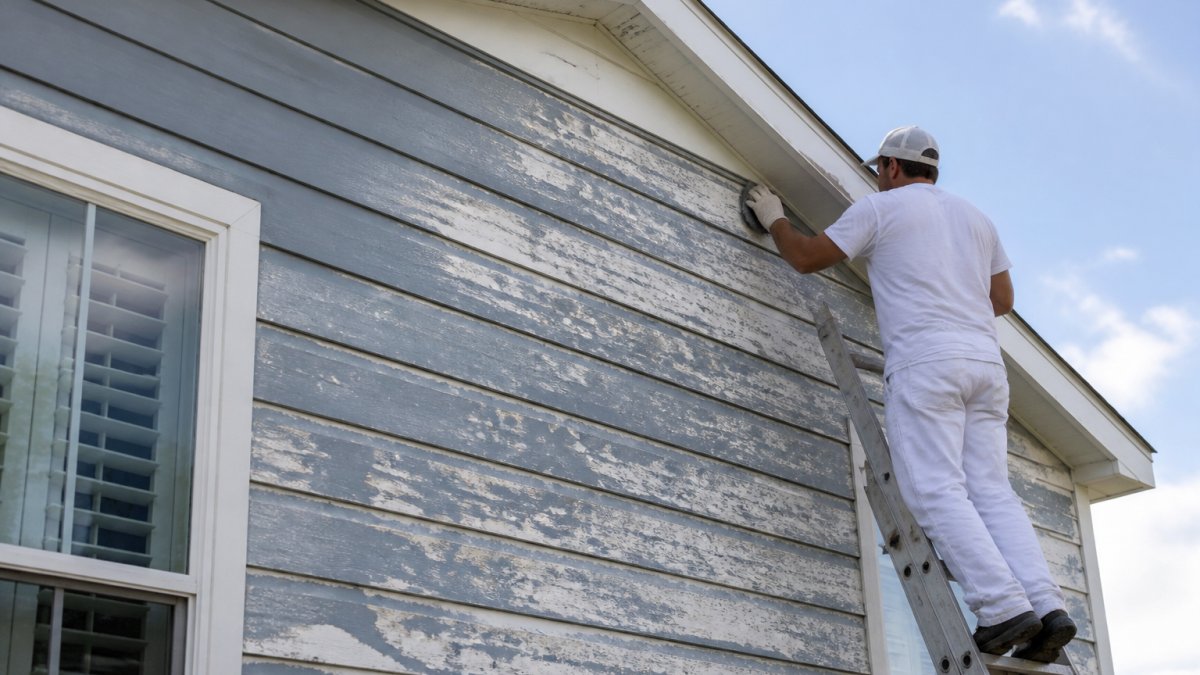
Peeling, cracking, or flaking paint is the clearest signal that your home needs exterior repainting. When paint curls away from the surface or flakes off in sheets, the protective coating has already failed and moisture is reaching the substrate underneath.
We look for three distinct patterns on coastal homes. Peeling shows the paint lifting in sheets. Cracking appears as fine lines that widen over time. Flaking means small pieces have already broken away.
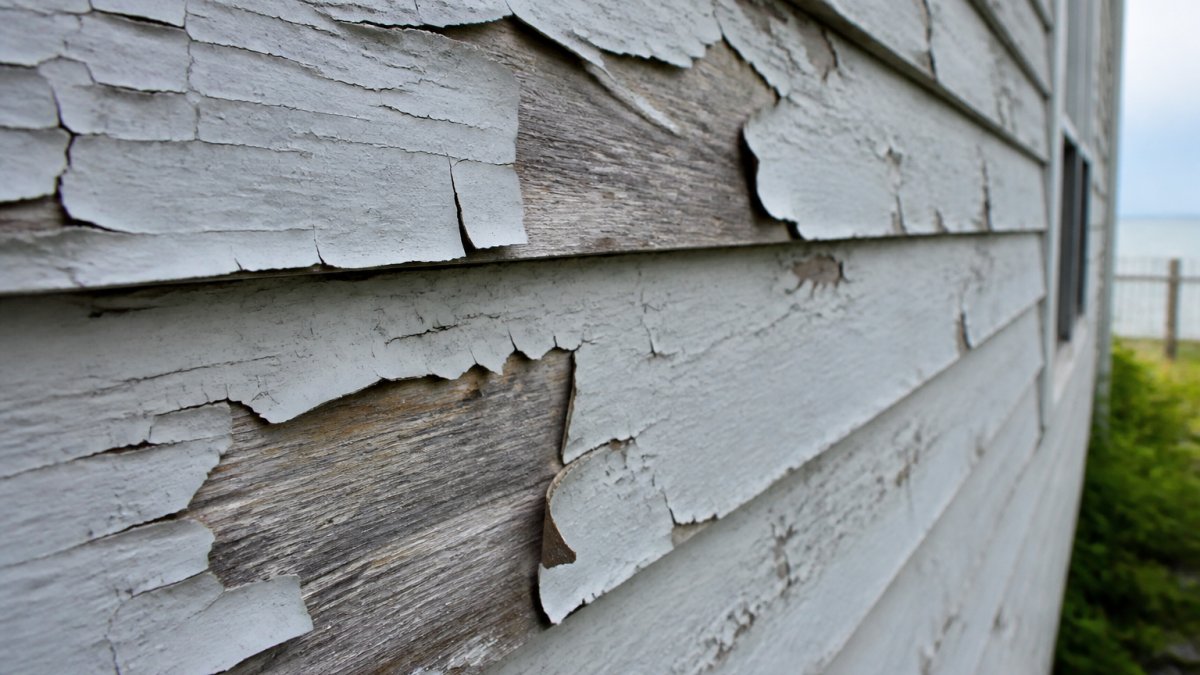
The cause usually traces to moisture trapped behind the paint film or poor surface preparation on the last job. Once bare wood is exposed, sun and salt air accelerate the damage quickly.
If you spot this, scrape a small test area to see how far the failure runs. Often it spreads wider than the visible patch suggests.
2. Fading Color and a Dull Exterior Appearance
Fading color and a dull exterior appearance mean the paint's pigment and protective resins have broken down under ultraviolet light. A washed-out finish is more than cosmetic: it signals the coating is no longer shielding the siding.
Sun exposure hits hardest on south- and west-facing walls. On those elevations, a color that looked rich two years ago can turn chalky and pale well before the rest of the house.
Compare a shaded section to a sun-blasted one. If the difference is obvious, the finish is aging unevenly and it's time to plan exterior repainting. Many homeowners find that a fresh coat restores curb appeal immediately and adds a layer of protection before deeper damage sets in.
3. Bubbling, Blistering, or Chipped Paint
Bubbling, blistering, or chipped paint points to moisture or heat pushing the coating away from the surface from behind. Small raised bubbles look like blisters; chips are where the paint has already broken off.
This is one of the signs your home needs exterior repainting that you should never ignore. Blistering almost always means water is getting in somewhere, whether from a leak, poor ventilation, or painting in direct sun that trapped solvent under the film.
A common mistake is popping the bubbles to "let it breathe" and painting over them. That hides the symptom and leaves the moisture source intact.
The real fix starts with finding where the water enters. Then the area gets scraped, sanded, primed, and recoated properly.
4. Chalking and Powdery Residue on Painted Surfaces
Chalking is a fine, powdery residue that rubs off on your hand when you touch the paint. It's normal for paint to chalk slightly as it ages, but heavy chalking means the binder has degraded and the coating is thinning.
Run your finger across a section of siding. If it comes away coated in a chalky film, the paint is near the end of its service life. Left alone, that powder washes down onto trim, windows, and landscaping, and it prevents new paint from bonding.
Washing alone won't fix heavy chalking. The surface needs proper preparation before any recoat, which is why we treat prep as the foundation of every exterior repainting project.
5. Water Damage, Moisture, and Cracked Caulking
Water damage, moisture, and cracked caulking around windows, doors, and corner joints are among the most serious warning signs. Caulk is the flexible seal that keeps water out of seams, and when it dries, shrinks, and cracks, water finds its way in.
Check the caulking lines at window frames, door frames, and corner joints. Gaps, cracks, or caulk pulling away from the surface all invite moisture behind the siding.
Left unaddressed, that moisture leads to rot, mold, and paint failure. Before any exterior repainting, the failing caulk must be removed and replaced, and any soft or damaged wood repaired.
6. Damaged Siding, Trim, and Exposed Wood
Damaged siding, cracked trim, and exposed wood mean the protective coating has been breached and the structure itself is now vulnerable. Once bare wood is visible, it absorbs moisture and starts to break down.
Look for cracked siding boards, splintered trim, and gaps where wood shows through. Wood rot often starts small and spreads behind the paint film where you can't see it.
This is where surface preparation decides the outcome. Scraping, sanding, and priming aren't optional steps; they're what makes a new coat of paint last. We limit our project load precisely so prep gets the time it deserves.
If rot has set in, the damaged section needs repair or replacement before painting. Skipping that step just buries a problem that returns fast.
7. Mold, Mildew, and Algae on Exterior Surfaces
Mold, mildew, and algae appear as dark streaks, green film, or fuzzy patches on siding and trim. In humid, coastal climates these growths thrive on moisture and organic material, and they're a clear sign the surface needs attention.
Mildew often looks like dirt that won't wash off. Algae tends to streak down walls in green or black lines. Mold can appear in damp, shaded areas that stay wet longest.
Before you assume it's just dirt, test a small spot with a diluted bleach solution. If the stain lightens, it's likely organic growth rather than grime. Cleaning and treating the surface is a must before any recoat, because paint won't bond to a contaminated wall.
Peeling Exterior Paint Causes: What's Really Happening
Peeling exterior paint causes come down to a few repeat offenders: moisture trapped behind the film, inadequate surface preparation, painting over a dirty or chalky surface, and applying paint in the wrong conditions. Each one breaks the bond between coating and substrate.
Understanding peeling exterior paint causes matters because it changes how you fix them. Repainting over a moisture problem or a poorly prepped wall just resets the clock on the same failure. The cure is diagnosis first, then preparation, then the right coating for the climate.
This is the difference between a paint job that lasts and one that peels again in two years. When you're ready to stop repainting on a loop, get a free estimate from Signature Coastal Coatings. Our veteran-owned team brings meticulous surface preparation and coatings built for heat, humidity, and salt air, with clear communication and on-schedule completion.
Frequently Asked Questions
What are the first signs that exterior paint is failing?
The earliest signals are usually subtle: a chalky film that rubs off on your hand, dull or faded color on sun-facing walls, and hairline cracks near window frames and corner joints. Peeling and bubbling tend to follow once moisture gets behind the paint layer. Walk your house once a year and check the south and west walls first, since sun exposure breaks down the protective coating faster there. Catching these signs early usually means a smaller, cheaper exterior repainting project instead of siding repairs.
How often should the exterior of a house be repainted?
Most homes need exterior repainting every 5 to 10 years, but coastal conditions shorten that window. Salt air, humidity, and intense sun exposure can push it closer to every 4 to 6 years, especially on wood siding. Vinyl and fiber cement hold up longer than bare wood. Rather than following a fixed calendar, inspect annually and repaint when you see chalking, fading, or cracked caulking. How often to repaint a house exterior depends more on what the surface is telling you than on a set schedule.
Can I just paint over old exterior paint?
Sometimes, but only if the old coat is sound. Paint will not adhere to a peeling, chalky, or blistered surface, and a fresh coat over failing paint will fail right along with it. Scrape loose areas, sand the edges smooth, and prime bare spots before recoating. If more than a small patch is compromised, the reliable path is to strip or heavily prep the surface first. Painting over old exterior paint without that prep is the most common reason repaints fail within a couple of years.
Does peeling exterior paint mean the siding needs repair?
Not always, but it is a warning worth taking seriously. Peeling often starts with moisture trapped behind the paint, and that moisture source, whether a failed caulk joint, a roof leak, or inadequate flashing, needs fixing before any repaint. Probe soft spots with a screwdriver; if the wood gives, rot has set in and that section of siding or trim needs replacement. Where the wood is still firm, scraping, sanding, and priming usually restore it. Address the cause, not just the symptom.