 blog
blog
Best Exterior Paint for Florida Humidity: 2026 Guide
Table of Contents
- Why Humidity Destroys Exterior Paint in Coastal Florida
- Key Features of the Best Exterior Paint for Florida Humidity
- Exterior Paint Mildew Resistance: What Actually Works
- Acrylic vs. Elastomeric Paint for Stucco and Masonry
- Professional Exterior Painting Surface Preparation for High-Humidity Homes
- Choosing the Right Finish: Satin vs. Semi-Gloss for Coastal Homes
- Step-by-Step Application Guide for DIYers
- Premium vs. Budget Paint: What You Actually Pay For
- Frequently Asked Questions
Last Updated: October 2, 2026
Why Humidity Destroys Exterior Paint in Coastal Florida
The best exterior paint for Florida humidity has to survive something most paints were never engineered for: air that stays wet. Coastal Florida's average relative humidity hovers in the mid-70s most of the year, and that moisture does not just sit on the surface. It moves through it.
- Peeling, when moisture trapped under a film pushes the coating off the substrate
- Blistering, when water vapor expands beneath a paint layer that cannot release it
- Chalking, when UV exposure breaks down the binder and leaves a powdery residue
Key Features of the Best Exterior Paint for Florida Humidity
The best exterior paint for Florida humidity combines four things: an acrylic latex binder, mildew-resistant additives, high moisture vapor transmission, and strong UV protection. Miss any one of these and the coating will fail early, no matter how carefully it is applied.
Here is what each feature does:
| Feature | What It Does | Why It Matters Here |
|---|---|---|
| Acrylic latex binder | Flexes with the substrate | Resists cracking as walls expand in heat |
| Mildew-resistant additives | Inhibit mold growth on the film | Humid air feeds mildew fast |
| High vapor transmission | Lets moisture escape | Prevents blistering and peeling |
| UV-blocking pigments | Slow color fading | Intense sun breaks down cheap binders |
| Alkali resistance | Withstands masonry pH | Protects stucco and concrete coatings |
Acrylic Latex vs. Alkyd: Which Binds Better in Wet Air
Acrylic latex outperforms alkyd in high-humidity environments because it stays flexible and lets moisture vapor pass through the film. Alkyds cure hard and form a tighter barrier, which traps vapor and leads to blistering on damp walls.
Exterior Paint Mildew Resistance: What Actually Works
Exterior paint mildew resistance comes from additives in the coating, not from the sheen or the color. Mildewcides mixed into the formula inhibit growth on the dried film, and their effectiveness fades over time as the coating weathers. Understanding how they work matters more than reading the label.
How Mildewcides Actually Function
Most exterior mildewcides fall into two broad categories: those that leach slowly from the film and those that stay bound in the binder. Leaching mildewcides migrate to the surface over time, which is why a coating can be mildew-resistant when new and vulnerable two or three years later. Bound mildewcides last longer but work only where the film is intact.
What Actually Works
- Paints labeled mildew-resistant with a listed active mildewcide, not just "mildew-resistant" marketing language
- A finish that sheds water rather than holding it, since standing moisture feeds growth
- Proper surface prep that removes existing mold spores, biofilm, and chalking before coating
- Adequate film thickness, because thin coats leave gaps where mildew can take hold
What Does Not Work
Painting over mildew. The spores survive under the new film and reappear within months. Clean with a mildewcide solution, rinse, and let the surface dry fully before coating. A common pattern is a homeowner who pressure-washes, sees the surface look clean, and paints the same day. The spores are still there, and the new coating fails within a season.
The Sheen Myth
A higher sheen does not make a coating mildew-resistant. It makes the film less hospitable to moisture retention, which indirectly slows growth, but the mildewcide is doing the actual work. A flat paint with a strong mildewcide package will outperform a semi-gloss with none. Do not let sheen selection substitute for reading the additive list.
Maintenance Reality
Mildewcide protection is not permanent. Most exterior coatings lose meaningful mildew resistance within three to five years in a humid climate, faster on north-facing walls that stay damp longer. An annual wash with a mild mildewcide solution removes surface spores and extends the window before the film itself becomes the problem. If mildew returns within a year of a repaint, the issue is almost always prep, not the paint.
Acrylic vs. Elastomeric Paint for Stucco and Masonry
Elastomeric coatings win on stucco and masonry with existing hairline cracks because they stretch and bridge gaps that standard acrylic cannot. Standard acrylic latex is the better choice for sound, uncracked surfaces where breathability and cost matter more.
Professional Exterior Painting Surface Preparation for High-Humidity Homes
Professional exterior painting surface preparation in a high-humidity climate means removing every trace of mildew, chalk, and loose coating before a drop of paint goes on. Skip this step and even premium coatings fail.
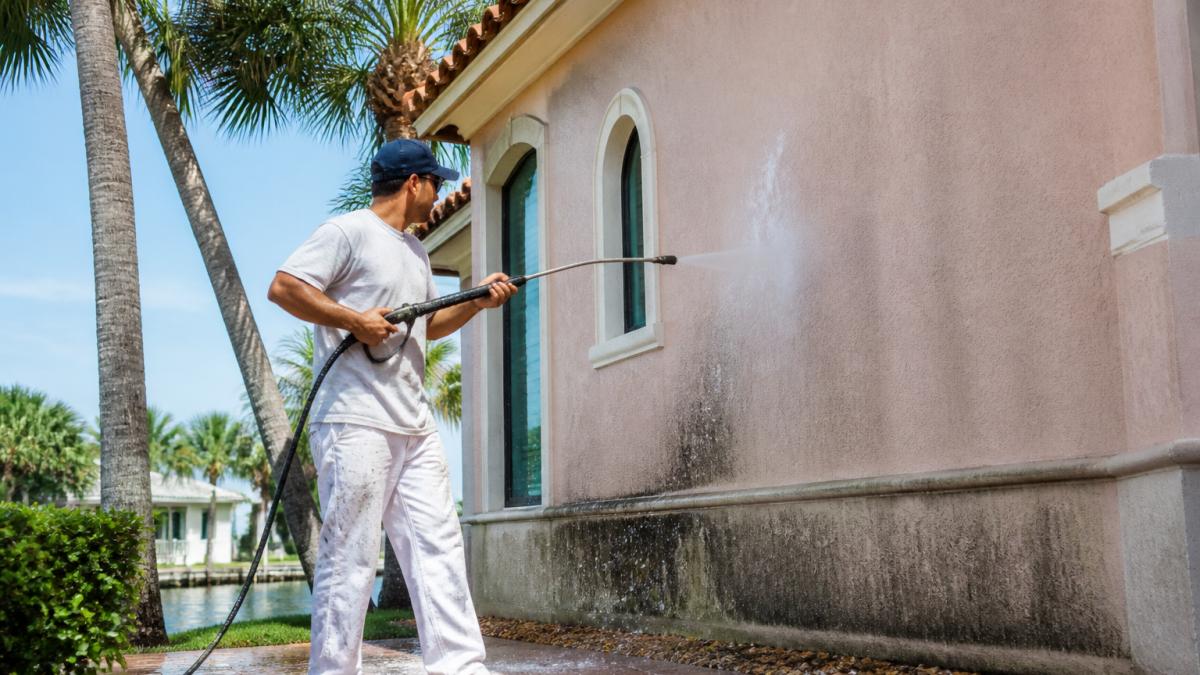
The sequence that works:
- Pressure-wash the full exterior and let it dry completely
- Scrape and sand any peeling or blistering areas back to sound substrate
- Treat mildew with a mildewcide solution, then rinse
- Fill cracks and patch stucco with a compatible patching compound
- Spot-prime bare areas with a bonding primer
- Check moisture content before coating
Choosing the Right Finish: Satin vs. Semi-Gloss for Coastal Homes
Semi-gloss holds up best on coastal exteriors because its tighter film resists moisture and cleans more easily. Satin is the better pick for large wall areas where a softer look matters more than maximum water resistance.
A practical split for coastal homeowners:
- Semi-gloss: trim, doors, shutters, and any surface that takes direct salt spray
- Satin: main body walls, where a slight sheen still sheds water without looking glossy
- Flat: rarely worth it outdoors here, since it holds dirt and offers little moisture resistance
Step-by-Step Application Guide for DIYers
Applying exterior paint in humid conditions comes down to timing and technique. Work in the morning before humidity peaks, and never paint in direct sun or when rain is forecast within 24 hours.
What You'll Need
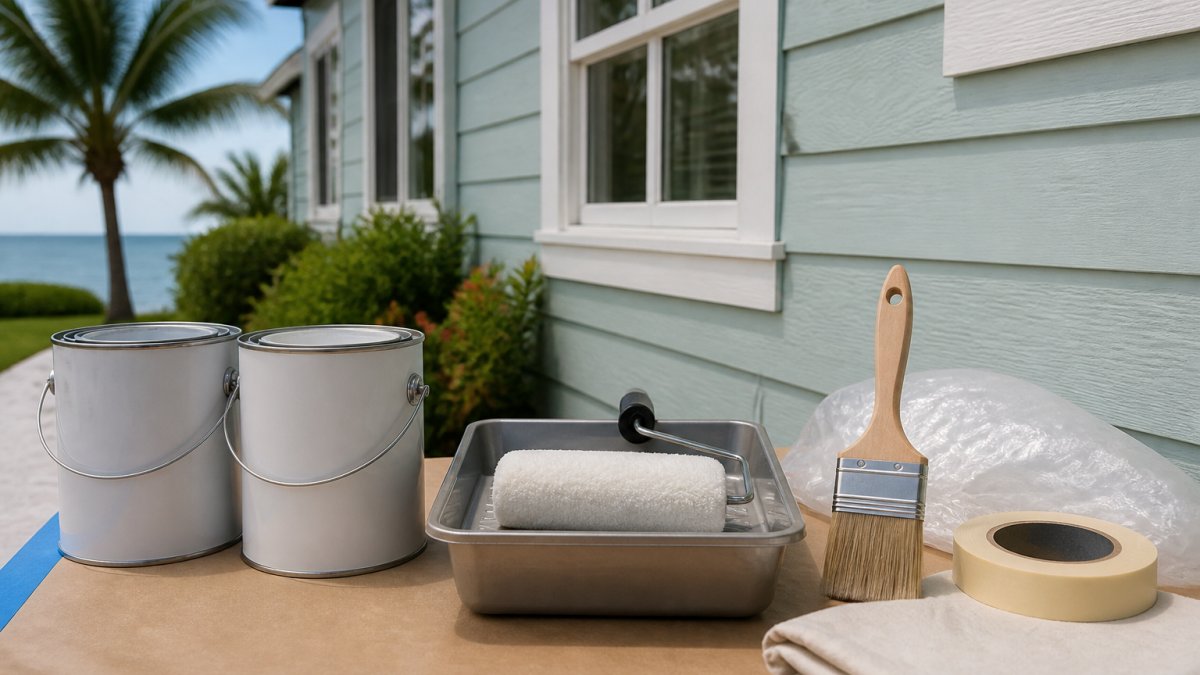
- Acrylic latex exterior paint with mildewcide
- Bonding primer
- Pressure washer and mildewcide cleaner
- Brushes, rollers, and an extension pole
- Painter's tape and drop cloths
- Clean the surface. Pressure-wash, treat mildew, and rinse. Let it dry at least 24 hours.
- Repair and prep. Scrape, sand, patch, and spot-prime bare areas.
- Check the weather. Confirm no rain for 24 hours and humidity below the label's maximum.
- Prime bare spots. Use a bonding primer for adhesion on patched or chalky areas.
- Cut in edges. Brush trim lines and corners before rolling the field.
- Roll the field. Apply in thin, even coats. Two thin coats beat one thick coat every time.
- Respect curing time. Let the first coat cure fully before the second, per the label.
Premium vs. Budget Paint: What You Actually Pay For
Premium exterior paint costs more because it carries more binder, better pigments, and stronger mildewcides. Budget paint cuts those ingredients, which shows up as faster fading, thinner film build, and earlier failure. The question is not whether premium costs more, but whether the difference survives a full repaint cycle.
What the Extra Money Buys
Three ingredients drive most of the price gap:
- Binder content. Higher binder-to-pigment ratio means a thicker, more elastic film that flexes with the substrate instead of cracking. Budget coatings often reduce binder and compensate with filler, which chalks and fails faster.
- Pigment quality. Titanium dioxide and lightfast organic pigments resist UV breakdown. Cheaper pigments fade and shift hue within a couple of seasons on sun-exposed walls.
- Mildewcide package. Premium coatings typically carry a more robust and longer-lasting mildewcide load, which matters more in a humid climate than almost anywhere else.
The Cost-Per-Year Calculation
A useful way to compare coatings is cost per year of service, not cost per gallon. If a budget coating costs less but needs repainting in four years while a premium coating lasts eight, the premium coating's annualized cost is often lower once you account for the labor to prep and repaint. Labor is the largest line item in any repaint, and it does not shrink because the paint was cheap.
The VOC and Air-Quality Angle
Most guides focus entirely on durability and skip air quality. VOC levels affect what you and your household breathe during and after application, especially near open windows and doors. Lower-VOC acrylics have closed much of the performance gap with conventional formulas, so choosing a low-VOC coating no longer means accepting a weaker film. Check the U.S. EPA's information on volatile organic compounds if indoor air quality during application matters to you.
Color Fading and UV Interaction
Darker shades fade faster under intense sun because they absorb more UV energy, and humidity accelerates the breakdown by keeping the film softer and more permeable. Lighter palettes hold their appearance longer on coastal walls. If you want a deep color, expect a shorter color-stability window and plan accordingly.
On the coast, the coating is the cheap part. Pay for the best exterior paint for Florida humidity you can afford, because the labor to redo it costs far more than the upgrade. Factor in VOC level if indoor air quality matters, and expect darker colors to fade sooner.
Frequently Asked Questions
What type of paint is best for high humidity areas?
100% acrylic latex exterior paint performs best in high humidity. Acrylic resin forms a flexible film that lets moisture vapor escape while blocking liquid water, so the wall can dry instead of trapping dampness under the coating. Look for a paint labeled mildew-resistant and rated for use in humid climates. For stucco and masonry, an elastomeric coating adds extra film build and bridges small cracks that let water in. Alkyd and oil-based paints cure hard and trap moisture, which leads to blistering and peeling in coastal conditions.
How do you prevent mold and mildew on exterior paint in humid climates?
Mildew resistance starts before the paint can is opened. Wash the surface with a bleach-and-water solution, rinse thoroughly, and let it dry completely. Repair any wood rot and caulk gaps around trim, windows, and doors. Then apply a mildew-resistant acrylic paint, ideally with a bonding primer on bare or chalky areas. Keep shrubs trimmed back from the siding and fix irrigation heads that spray the walls. Standing moisture against the surface is what feeds mildew, so drainage and airflow matter as much as the coating itself.
Is acrylic or oil-based paint better for humid weather?
Acrylic is the better choice for humid weather. Acrylic latex stays flexible and allows moisture vapor transmission, so walls dry from the inside out. Oil-based and alkyd paints cure into a rigid film that resists water vapor, trapping moisture in the substrate. In a high-humidity environment that trapped moisture pushes the film off the wall, causing peeling and blistering within a few seasons. Oil-based products still have a place on bare metal and some primers, but for exterior siding, stucco, and trim in humid climates, acrylic latex is the standard.
How often should you repaint a home in a humid climate?
A properly prepped home painted with quality 100% acrylic exterior paint typically holds up 7 to 10 years in a humid coastal climate. Homes getting direct salt air and afternoon sun may need touch-ups sooner, especially on south- and west-facing walls. Watch for chalking, fading, and hairline cracks as early signals. Repainting before the film fails costs far less than repairing water damage behind it. If your last paint job lasted only three or four years, the problem is usually surface preparation or product choice, not the climate.
Coastal homes punish shortcuts, and paint is where those shortcuts show up first. Signature Coastal Coatings handles the full process, from meticulous surface preparation to a lasting finish built for heat, humidity, and salt air. As a veteran-owned company with over a decade in the trades, we limit our project load so every job gets full attention and stays on schedule. Get started with Signature Coastal Coatings and request your free estimate for a finish that holds up to the coast.