 listicle
Commercial Property Exterior Maintenance Tips
Table of Contents
- Why Commercial Property Exterior Maintenance Matters
- Commercial Building Exterior Inspection Checklist
- Commercial Property Maintenance Checklist
- Commercial Building Maintenance Schedule
- Commercial Exterior Cleaning Tips
- Preventing Water Intrusion and Drainage Problems
- Budgeting and Vendor Management for Exterior Maintenance
- Frequently Asked Questions
Last Updated: October 5, 2026
Why Commercial Property Exterior Maintenance Matters
Commercial property exterior maintenance is the ongoing practice of inspecting, cleaning, and repairing a building's outside surfaces, from the roof to the parking lot, to protect the asset and the people who use it. Neglect shows up fast in a salt-air climate. A small roof leak or a clogged downspout becomes a stained ceiling and a tenant complaint within a season.
The stakes are higher than curb appeal. Water intrusion is the leading driver of premature exterior failure, and once moisture reaches the substrate, repair costs climb quickly. A routine inspection catches these problems while they are still cheap to fix.
Below, we break down the exterior maintenance checklist, inspection schedule, and cleaning methods that keep a commercial building in good condition year round. The core idea is simple: preventive maintenance costs less than reactive repair, every time.
Commercial Building Exterior Inspection Checklist
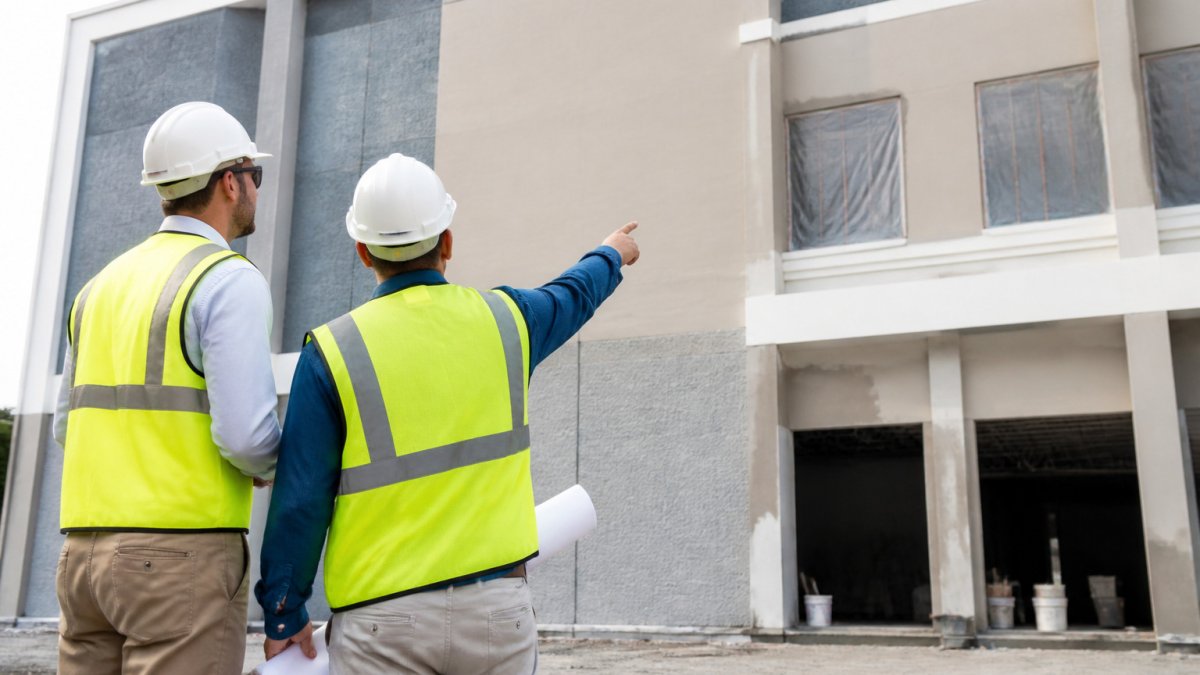
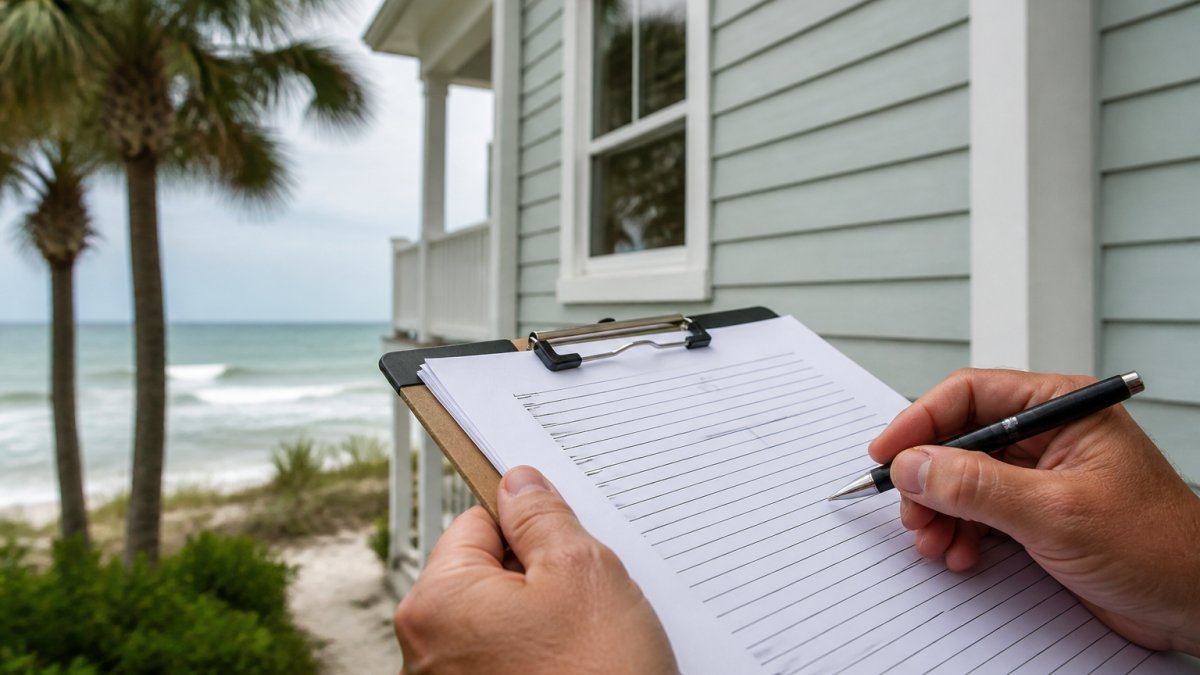
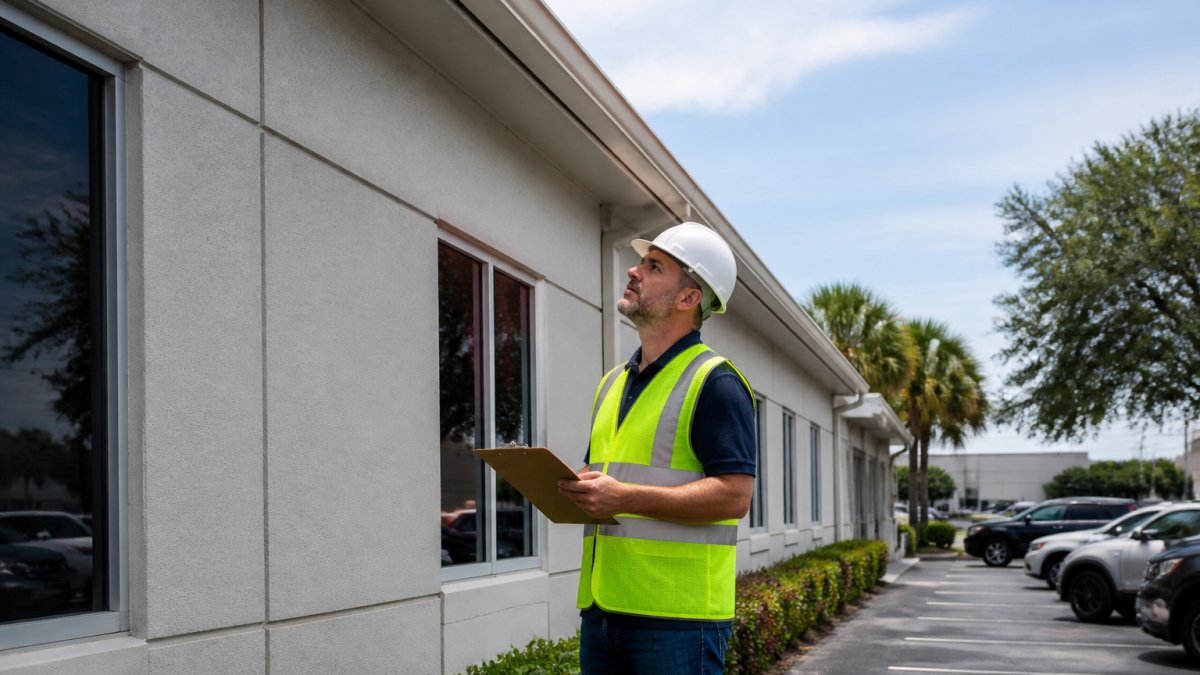
A commercial building exterior inspection checklist is a documented, walk-through review of every exterior surface and system, recorded so you can track condition over time. The goal is to find small defects before they become structural or safety problems. Walk the property in the same order every time so nothing gets missed.
Roof and Drainage Checks
Start at the roof. Look for cracked or missing sealant, ponding water, and blistered membrane. Check that gutters and downspouts flow freely and discharge away from the foundation. In coastal climates, salt air and humidity accelerate corrosion on metal flashing, so inspect those fasteners closely. Standing water on a flat roof is a warning sign, not a cosmetic issue.
Facade, Paint, and Surface Damage
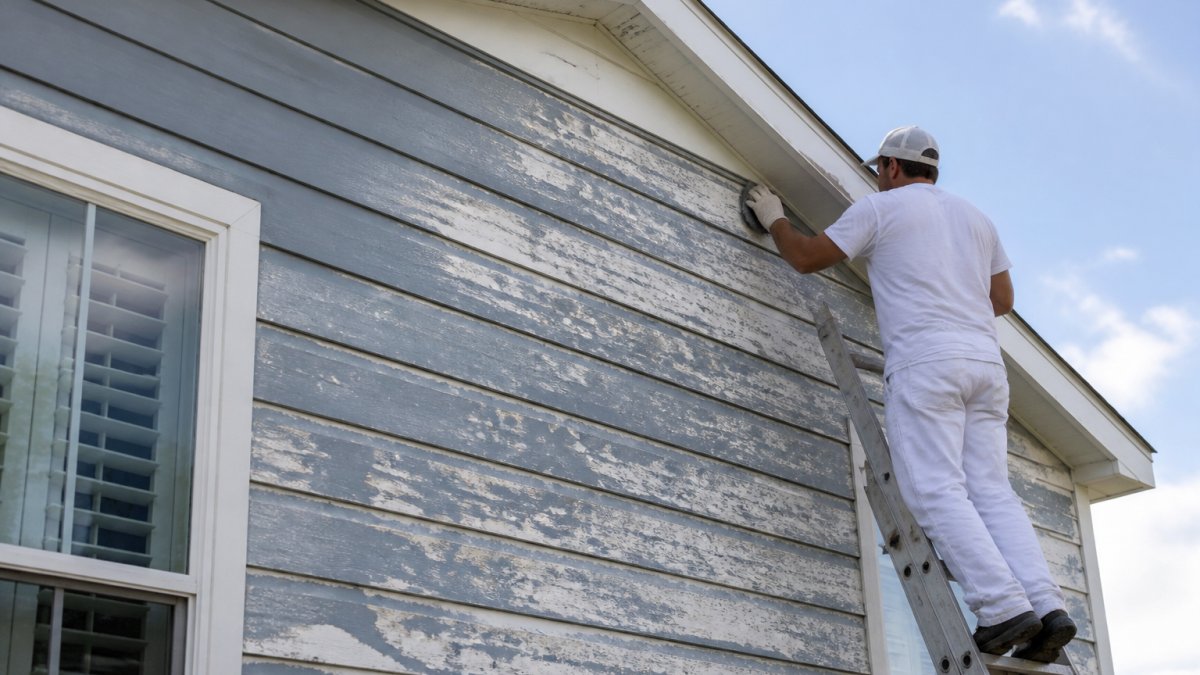
Move down to the facade. Look for cracks in the render, chalking or peeling paint, and rust stains that point to hidden moisture. Check caulking around windows and joints, since failed sealant lets water in behind the surface. Note any biological growth, such as mold or algae, which holds moisture against the wall. Document paint condition by elevation so you can plan repainting before the coating fails.
Commercial Property Maintenance Checklist
A commercial property maintenance checklist turns inspection findings into scheduled work. The table below maps common problems to the fix and the likely impact if ignored.
| Problem Found | Fix | Impact If Ignored |
|---|---|---|
| Clogged gutters | Clear debris, flush downspouts | Water intrusion, foundation damage |
| Peeling paint | Prep and recoat surface | Substrate rot, higher repaint cost |
| Roof ponding | Repair drainage, reseal seams | Membrane failure, interior leaks |
| Oil-stained pavement | Degrease, seal surface | Slip risk, surface breakdown |
| Overgrown landscaping | Trim, clear from walls | Pest entry, trapped moisture |
Parking Areas, Walkways, and Landscaping
Paved surfaces take constant wear. Sweep parking areas and walkways regularly, and treat oil stains and gum before they set. Check for cracks and trip hazards, since these are a liability as much as a maintenance issue. Keep landscaping trimmed back from the building, because shrubs against a wall trap moisture and give pests a path inside. Clean sidewalks protect occupant perception as much as they protect the surface.
Commercial Building Maintenance Schedule
A commercial building maintenance schedule sets the frequency for each task so maintenance happens on a rhythm instead of in a panic. The right cadence depends on building type, climate exposure, and surface material, which is where most generic checklists fall short. Use the matrix below as a starting point, then adjust for your property's specific conditions.
| Building Type | Roof & Drainage | Facade & Paint | Paved Surfaces | Landscaping |
|---|---|---|---|---|
| Single-tenant retail (high foot traffic) | Quarterly | Twice a year | Monthly sweep, quarterly crack check | Monthly trim |
| Multi-tenant office | Quarterly | Annually | Monthly sweep, quarterly seal check | Monthly trim |
| Low-occupancy warehouse | Twice a year | Every 2-3 years | Quarterly sweep, annual seal check | Twice a year |
| Coastal or salt-air exposure | Monthly | Annually | Quarterly wash, quarterly seal check | Monthly trim |
| Heavy tree cover | Monthly gutter clear, quarterly full check | Annually | Quarterly sweep | Monthly debris clear |
Climate drives frequency as much as building type. A property in a freeze-thaw climate needs more frequent pavement crack checks because water expands in cracks and accelerates spalling. A property in a hot, humid climate needs more frequent biological growth treatment on north-facing walls. A property in a high-wind or hail region needs roof inspections after every major storm event, not just on the calendar.
Material also matters. A building with an elastomeric coating on the facade may need recoating every 7-10 years, while a bare masonry wall may need repainting every 3-5 years. A modified bitumen roof has a different service life than a TPO or EPDM membrane. Match the schedule to the actual assembly, not to a generic template.
Document each inspection with date, inspector, findings, and photos. That record becomes the basis for your budget and your vendor scope of work. Without it, you are guessing at what needs attention and when.
Commercial Exterior Cleaning Tips
Regular cleaning protects surfaces and keeps the building presentable. Dirt, salt, and biological growth all hold moisture and break down coatings faster when left in place. These commercial exterior cleaning tips cover the methods and the timing.
Clean windows on a regular cycle for appearance and to spot seal failure early. Remove leaves and debris before they clog drains. Treat biological growth on walls and walkways with the appropriate cleaner rather than a hard blast, which can drive water into the surface.
Pressure Washing vs. Soft Washing
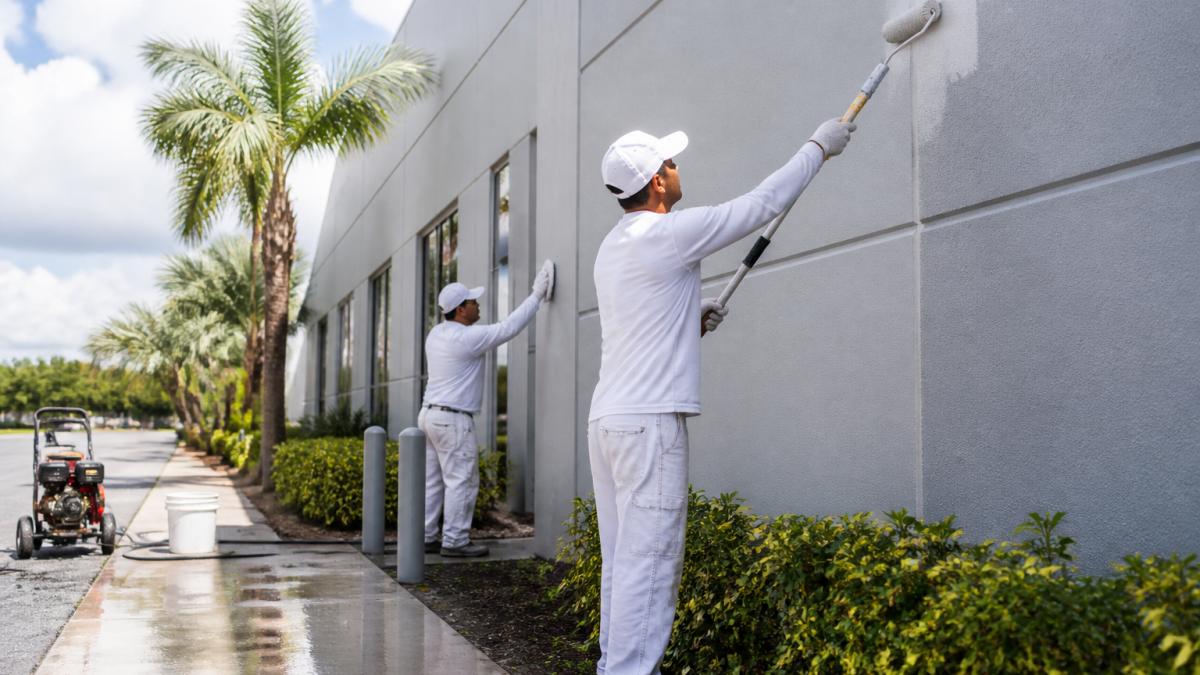
The right method depends on the surface, not on the dirt. Pressure washing uses high-pressure water for hard, durable surfaces like concrete pavement. Soft washing uses lower pressure with cleaning solutions for siding, painted walls, and roofing, where high pressure would strip paint or force water behind the surface. Using the wrong method is a common and expensive mistake.
Preventing Water Intrusion and Drainage Problems
Water intrusion prevention starts with drainage. Water that cannot leave the property will find its way into the building. Keep gutters and downspouts clear, confirm that downspouts discharge well away from the foundation, and check that the ground slopes away from the walls rather than toward them. Stormwater that pools near a building is a slow, steady threat to the foundation and the facade.
Sealant and caulking are the second line of defense. Failed joints around windows, doors, and penetrations let water in behind the coating, where it does damage you cannot see until it surfaces as a stain or a soft spot. Re-caulking is inexpensive and prevents repairs that are not. After heavy rain, walk the property and look for new staining or ponding, which points to a drainage problem you have not yet addressed.
Budgeting and Vendor Management for Exterior Maintenance
Exterior maintenance costs are far more predictable when you plan them. Set an annual budget that covers routine cleaning, inspections, and a reserve for repairs. Lifecycle budgeting means replacing or recoating surfaces on a schedule rather than waiting for failure, which spreads the cost and avoids emergency spending. Building condition stays higher and surprises stay lower.
A practical way to build the reserve is to estimate the replacement cost of each exterior assembly and divide by its expected service life. For example, if a roof section costs $50,000 to replace and has a 20-year life, you should be setting aside roughly $2,500 per year for that assembly alone.
Repair-versus-replace decisions follow a simple rule of thumb: if the repair cost exceeds roughly 30-40% of replacement cost and the assembly is already past 70% of its service life, replacement is usually the better financial choice. Below that threshold, repair and monitor. Document the decision either way, because the next property manager will need the history.
Vendor selection matters as much as the budget. When you hire an exterior maintenance or painting provider, ask for proof of licensing and insurance, references from comparable properties, and a clear scope of work.
A clear scope of work should specify surface preparation methods, products by name and manufacturer, number of coats, dry film thickness where applicable, and the warranty terms. It should also state who is responsible for protecting landscaping, vehicles, and pedestrian access during the work. Vague scopes are where disputes start.
Track service-level performance: did they show up on schedule, complete the work as specified, and stand behind it? Keep a simple log of inspection dates, work completed, and any callbacks. A provider who disappears after the invoice is a cost, not a solution. A provider who documents their work and returns for warranty issues is an asset.
For multi-building portfolios, consider consolidating exterior work with one qualified provider to simplify scheduling and warranty tracking. But only consolidate if the provider has the capacity to handle your portfolio without stretching crews thin. Capacity is a real constraint, and a provider who takes on too much work will miss schedules.
We are veteran-owned, we limit our project load to keep quality high, and we do the surface preparation that makes a coating last in heat, humidity, and salt air. For commercial clients, we schedule work to minimize disruption to tenants and operations. If you manage multiple buildings, we can plan the work so you are not waiting months between jobs.
Frequently Asked Questions
What should be included in a commercial property exterior maintenance checklist?
A thorough checklist covers roof inspections for damaged shingles or membrane, gutter and downspout clearing, facade checks for cracks or peeling paint, parking lot surface condition, walkway safety, window and door seals, landscaping upkeep, and debris removal. Include dates and notes for each item so you can track trends over time. This documentation helps you plan repairs before small issues become expensive structural problems.
How often should a commercial building exterior be inspected?
Most commercial buildings benefit from a full exterior inspection twice a year, ideally in spring and fall. Properties in coastal or storm-prone areas may need quarterly walk-throughs. After any severe weather event, do a targeted inspection of the roof, facade, and drainage systems. Regular inspections catch water intrusion, paint failure, and surface damage early, when repairs are simpler and less costly.
What are the most common exterior maintenance problems for commercial properties?
Water intrusion tops the list, often caused by clogged gutters, failed sealants, or roof damage. Other frequent issues include paint peeling from weather exposure, cracks in the facade, oil stains and gum on parking areas, and overgrown landscaping that traps moisture against the building. Ignoring these leads to higher repair costs and can affect occupant perception and curb appeal. A written maintenance schedule helps you stay ahead of them.
How can property managers prevent water damage to a commercial building?
Start with drainage: keep gutters and downspouts clear, and make sure water flows away from the foundation. Inspect roof flashing and seals around vents and HVAC units each season. Check exterior walls for cracks or open joints where rain can enter. After storms, look for ponding on the roof or near entries. Addressing these areas promptly is far cheaper than repairing interior water damage or mold later.
Exterior maintenance is a discipline, not a one-time project, and the buildings that hold their value are the ones where someone is paying attention every season. If your property needs a coating that can handle coastal heat, humidity, and salt air, Signature Coastal Coatings brings meticulous surface preparation, veteran-owned accountability, and on-schedule completion to every job. Request a free estimate and get a plan built for your building, not a template.