 how-to
How to Set Realistic Coastal Exterior Painting Warranty Expectations
Last Updated: November 2, 2026
Quick Summary
Coastal exterior painting warranty expectations should assume shorter paint lifespan and narrower coverage than inland homes, because salt spray, humidity, and UV are usually excluded as normal weathering. Expect contractor labor warranties of 1-5 years and separate manufacturer product warranties that exclude labor, fading, and chalking.
- Salt spray, humidity, UV, and wind-driven rain drive chalking, fading, and early adhesion loss on coastal homes.
- Contractor labor warranties typically run 1-5 years and cover workmanship, prep, and application.
- Manufacturer product warranties usually exclude labor, fading, and chalking, and are often not transferable.
- Coastal contracts commonly exclude salt spray damage, mildew, moisture intrusion, and substrate failure.
- Photograph any failure in daylight and send dated written notice before repairing or repainting.
Table of Contents
- Why Salt Air and Humidity Rewrite Warranty Rules
- What Does a House Painting Warranty Cover?
- Exterior Paint Warranty Length: Workmanship vs. Manufacturer Terms
- Painter Warranty Exclusions Coastal Homeowners Should Expect
- Painting Warranty Questions to Ask Before You Sign
- How to Document a Paint Failure and File a Warranty Claim
- What to Expect From Your Coastal Painting Warranty Conversation
- Frequently Asked Questions
Why Salt Air and Humidity Rewrite Warranty Rules
Coastal exterior painting warranty expectations start with one hard truth: the coast is a tougher testing ground than any warranty document admits. We work in salt air every week, and we tell homeowners the same thing before they sign anything.
That distinction matters because most warranty disputes we see begin with a mismatch in expectations. The homeowner expected a decade of protection. The contract promised something narrower.
How Coastal Weather Attacks Exterior Paint
Salt spray lands on siding, trim, and railings and stays there until rain washes it off. Humidity slows drying and traps moisture in wood and masonry. Sun exposure breaks down the resin that holds a coating together.
The result shows up as chalking, fading, and early adhesion loss, often on south- and west-facing walls first. If you want to reduce the damage before it starts, our guide on protecting exterior paint from salt air walks through the practical steps.
Why Coastal Paint Lifespan Runs Shorter
Inland homes often get many years from a quality exterior coating. Coastal homes rarely match that.
That gap between inland and coastal performance is not a paint defect. It is exposure.
What Does a House Painting Warranty Cover?
A house painting warranty covers specific failures in workmanship or product performance for a set period, and it rarely covers everything that can go wrong. Most warranties split into two layers: the contractor's labor warranty and the paint manufacturer's product warranty.
Coverage usually addresses peeling, blistering, and cracking caused by poor surface preparation or application. For a deeper breakdown of the terms themselves, read what exterior paint warranty terms actually cover.
Exterior Paint Warranty Length: Workmanship vs. Manufacturer Terms
Exterior paint warranty length depends on which warranty you are reading. According to Southwest Exteriors' guidance on exterior paint warranties, some exterior-paint warranties are one year while other offers describe three- or five-year coverage.
Manufacturer warranties are a separate document. They usually cover the coating itself, exclude labor, and often are not transferable to a new owner.
| Warranty Type | Typical Duration | Covers | Usually Excludes |
|---|---|---|---|
| Contractor labor | 1-5 years | Workmanship, prep, application | Weathering, substrate failure |
| Manufacturer product | Varies, often limited | Coating defects | Labor, fading, chalking |
| Workmanship only | 1-3 years | Application errors | Product performance |
| Full system | Negotiated | Prep plus coating | Environmental damage |
The two layers do not stack into one big guarantee. They cover different things.
Painter Warranty Exclusions Coastal Homeowners Should Expect
Painter warranty exclusions are where coastal homeowners get surprised. A warranty may cover only workmanship or specified paint failures rather than every cause of deterioration, which is how Superior Pro describes exterior paint warranty coverage layers.
The reason is mechanical. Salt spray leaves a hygroscopic film on siding and trim; that film holds moisture against the coating and accelerates adhesion loss at edges, seams, and fastener heads.
Coastal contracts commonly include exclusions such as:
- Normal fading and chalking from UV exposure, treated as weathering, not a coating defect
- Mildew and mold growth, common in humid air and often worse on shaded north walls
- Salt spray damage and salt-driven adhesion loss, sometimes written as "atmospheric contaminants"
Watch out for two clauses in particular. First, a warranty that excludes salt air damage on a home 200 feet from the water is close to no warranty at all, read that clause before you compare quotes. Second, look for language that voids coverage if the homeowner fails to "maintain" the coating, then check whether the contract defines maintenance.
A practical way to read the exclusion list is to sort each item by who controls the cause. Prep, application, and caulk work are contractor-controlled, so exclusions there are a red flag. UV, salt, and humidity are site-controlled, so exclusions there are normal but should be paired with a realistic repaint interval in the contract. Substrate and moisture-source failures are owner-controlled, so the warranty should say plainly that they are outside scope rather than implying the coating failed.
Painting Warranty Questions to Ask Before You Sign
Painting warranty questions to ask fall into four buckets: duration, coverage, exclusions, and process. Ask them before you sign, not after the first blister appears. The answers separate a real warranty from marketing language.
Ask directly:
- How long is the labor warranty, and does it start at completion or final payment?
- Does the warranty cover peeling and blistering only, or also fading?
- What voids the warranty, and does coastal exposure count?
- Is the manufacturer warranty separate, and do I receive the paperwork?
- Who inspects a claim, and how long does a response take?
- Is the warranty transferable if I sell the home?
- Will you put all of this in the written contract?
If a painter cannot answer these in writing, that is your answer. Our guide on how to hire reliable residential exterior painters covers the vetting process in more detail.
A Practical Warranty Checklist for Your Painting Contract
Use this checklist before signing. Print it and mark each item.
- Labor warranty duration stated in writing, with start date
- Manufacturer product warranty attached as a separate document
- Coverage list names peeling, blistering, and cracking explicitly
Any blank line is a question to ask before you sign.
How to Document a Paint Failure and File a Warranty Claim
Documenting a paint failure and filing a warranty claim comes down to evidence, timing, and diagnosis. Report the problem in writing as soon as you notice it, and photograph everything before anyone touches it.
Start with diagnosis, because the cause decides which warranty applies. Most coastal failures fall into one of five buckets:
- Coating failure, peeling, blistering, or flaking that traces to prep or application. This is the contractor's labor warranty territory.
- Substrate movement, cracks that follow joints, seams, or masonry mortar lines. The coating moved with the building; this is usually excluded.
- Moisture intrusion, blistering or peeling concentrated below a window, gutter, or roofline, often with soft or discolored substrate behind it. The water source is the cause, not the paint.
A useful rule of thumb: if the failure is patchy and follows a seam, a penetration, or a low spot, suspect moisture or substrate. If it is uniform across a sun-facing wall, suspect UV weathering.
Follow these steps:
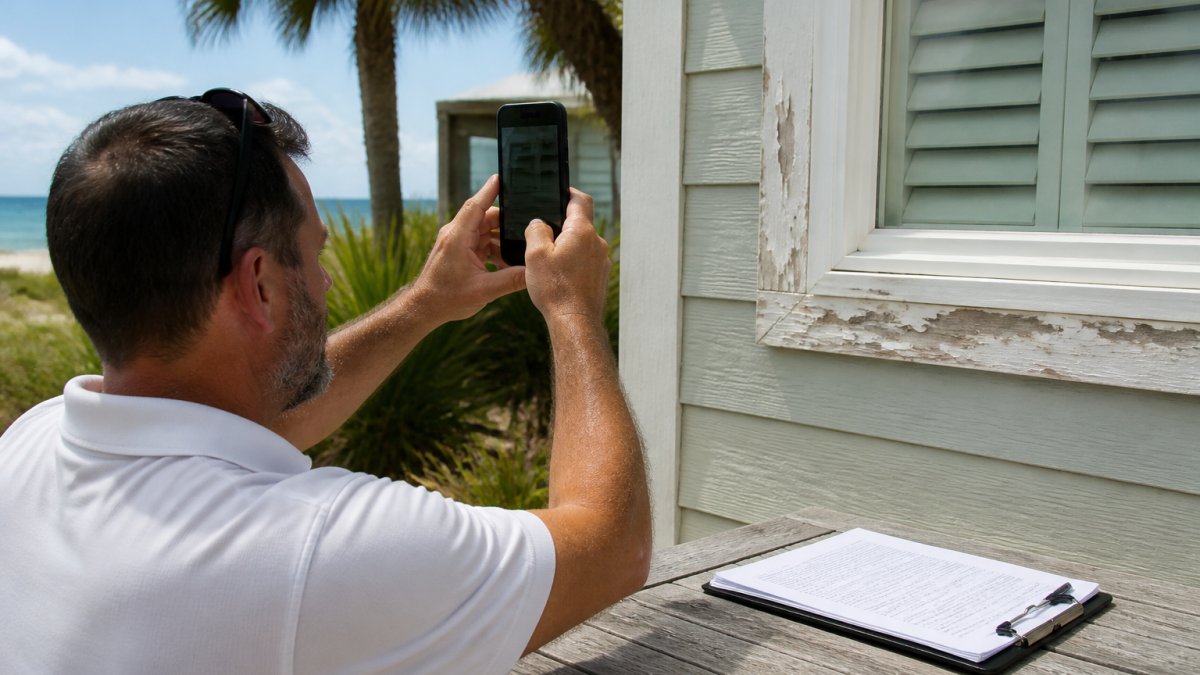
- Photograph the failure in daylight, wide shot and close-up, with a tape measure or coin for scale. Include one photo that shows the wall orientation and nearby penetrations.
- Note the date, location, and weather of each affected area, wall by wall. Record recent rain or wind events if they preceded the failure.
- Save your original contract and both warranty documents, including the manufacturer's product data sheet if you received one.
- Write a dated notice to the contractor describing the failure, stating the date you first observed it, and requesting an inspection. Send it by a method that creates a record.
- Do not repair or repaint the area until the contractor inspects it. If the failure is letting water in, document it and ask the contractor to authorize temporary mitigation in writing.
- Request the inspection findings in writing, including the cause, the remedy, and whether the remedy is repair or repaint.
- Escalate in writing if the response is slow, and keep every message, photo, and receipt.
Diagnosing Failure: Peeling, Blistering, Fading, and Who Owns the Fix
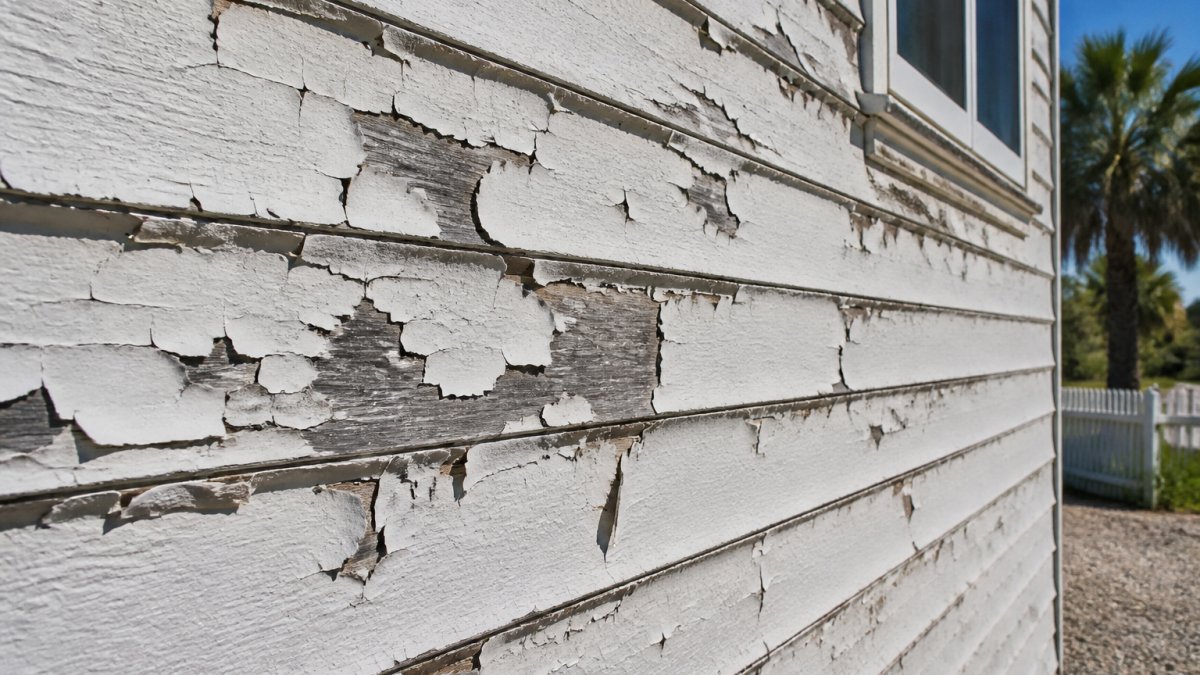
Peeling and blistering usually point to moisture or poor adhesion, which lands on workmanship. Fading and chalking point to UV exposure, which usually lands on the exclusion list.
Two nuances matter on the coast. First, a failure can have more than one cause, salt film plus a missed primer coat can produce peeling that neither the contractor nor the manufacturer will accept alone. Second, the remedy is not always a repaint.
Understanding the cause protects you. If you are not sure why the paint is failing, our breakdown of why exterior paint keeps peeling explains the common culprits, from trapped moisture to inadequate prep, so you can tell a defect from an exclusion before you call.
What to Expect From Your Coastal Painting Warranty Conversation
A good warranty conversation is specific, written, and honest about limits. Expect a contractor to explain what the warranty covers, what it excludes on a coastal home, and how a claim is handled.
At Signature Coastal Coatings, we put warranty terms in writing before work begins. As a veteran-owned company, we limit our project load so every job gets full attention, and we build our process around the heat, humidity, and salt air of the Florida coast.
Frequently Asked Questions
What should an exterior painting warranty cover?
A solid exterior painting warranty should spell out two separate layers. The contractor workmanship warranty covers application defects like peeling caused by poor surface preparation, blistering from trapped moisture, and premature caulk separation. The manufacturer product warranty covers the coating itself against defects in the can. Ask for both in writing, and confirm whether labor to redo a failed job is included or excluded. Many product warranties cover materials only and exclude labor, which leaves you paying for the repaint.
How long should a painter's workmanship warranty last on a coastal home?
Workmanship terms vary widely. Some contractors offer one-year coverage while others advertise three- or five-year terms, and coastal exposure often shortens what a painter will commit to. Treat the length as a signal, not a promise of lasting appearance. Ask what triggers a valid claim, how fast the painter responds, and whether the remedy is a repair or a full repaint.
Does a coastal painting warranty cover fading from sun and salt air?
Usually not as a standalone claim. Fading and discoloration from UV exposure and salt spray are often listed among painter warranty exclusions because they are treated as normal weathering rather than a defect. Some manufacturer guarantees address fade resistance for a stated period, but read the fine print on surface type and exposure. Before signing, ask the contractor to state in writing whether fading is covered, what threshold counts as failure, and which elevations or surfaces the term applies to.
What can void an exterior painting warranty?
Common voiding triggers include pressure washing or painting by another contractor, neglect of routine maintenance like caulking and cleaning, structural water intrusion from failed flashing or roofing, and pest or storm damage. Many terms also require the homeowner to report a defect within a set window and allow the original painter to inspect and repair first. Keep your contract, product data sheets, and dated photos. If you hire someone else to touch the coating, expect the original coverage to end.
Coastal paint will always face tougher conditions than inland paint, and no warranty changes the weather. What a good warranty does is make responsibility clear when something fails. If you are ready to talk through coverage with a local painter, request a free estimate and bring your warranty questions with you. Get started with Signature Coastal Coatings and set expectations that hold up.