 how-to
How to Hire Reliable Residential Exterior Painters
Table of Contents
- How to Choose a Painting Contractor
- Questions to Ask a Painting Contractor
- Understanding Your Exterior Painting Estimate Checklist
- What to Look for in a Painting Contract
- How Long Does Exterior House Painting Take
- The Exterior Painting Process and Surface Preparation
- Material Quality and Paint Durability for Coastal Climates
- Post-Project Maintenance and Warranty Coverage
- Frequently Asked Questions
Last Updated: October 9, 2026
How to Choose a Painting Contractor
Hiring the right contractor is the difference between a paint job that lasts five years and one that holds up for fifteen. When you're ready to hire reliable residential exterior painters, you're making a decision that affects your home's protection and curb appeal for years to come. The good news: thorough evaluation takes a few hours and saves thousands in costly repairs.
Start by identifying contractors who specialize in residential exterior work. General handymen may offer lower prices, but exterior painting requires specific knowledge about surface preparation, weather resistance, and the durability challenges your climate presents. A contractor who understands your local environment, humidity, salt air, UV exposure, will recommend materials and techniques that actually protect your home.
Verify Licensing and Insurance
Before anything else, confirm that any contractor you consider is properly licensed. Licensing requirements vary by state, but most require painting contractors to hold a valid trade license. This protects you legally and ensures the contractor has passed basic competency standards.
Insurance is equally critical. Ask for proof of general liability insurance and workers compensation coverage. General liability protects you if the contractor damages your property during the job. Workers compensation covers injuries to their employees, without it, you could be liable if someone gets hurt on your property. Request a certificate of insurance and verify it's current. Don't accept verbal assurance; see the documentation yourself.
Check References and Past Work
Ask for at least three references from recent projects, ideally within the last two years. Contact these references directly and ask specific questions: Did the contractor finish on schedule? Was the quality consistent? Did they communicate clearly? Did the paint hold up well?
Request to see photos of completed exterior projects. Better yet, ask if you can drive by finished homes in your area. Seeing work in person, especially if it's weathered a season or two, tells you far more than marketing photos. Look for clean lines, even color coverage, and attention to detail around trim and edges.
Questions to Ask a Painting Contractor
The conversation you have before hiring reveals whether a contractor is organized and detail-oriented. Here are the questions that matter most when you're evaluating who to hire reliable residential exterior painters:
What's your process for surface preparation? This is the most important question. Poor preparation is the #1 reason paint fails. A quality contractor will describe power washing, scraping, caulking gaps, and priming bare wood. If they brush off this question or say "we'll prep as needed," that's a red flag.
How long have you been in business, and do you specialize in exterior work? Experience matters. A contractor with residential exterior work understands regional climate challenges and has refined their process through projects.
Can you provide a written estimate that breaks down labor, materials, and timeline? Vague quotes are a warning sign. A professional estimate lists square footage, paint specifications, prep work, number of coats, and labor hours.
What warranty do you offer on your work? Reputable contractors stand behind their work. If they offer no warranty, ask why.
How do you handle unexpected issues? During prep work, contractors often discover rot, water damage, or structural problems. Ask how they'll communicate these findings and adjust pricing if extra work is needed.
Will you pull permits if required? Some exterior painting projects require permits, especially if structural repairs are involved. A contractor who knows local requirements and handles this saves you headaches.
Understanding Your Exterior Painting Estimate Checklist
A professional estimate is your roadmap. It should be detailed enough that you understand exactly what you're paying for. Here's what to look for:
Project scope: Square footage of surfaces to be painted, specific areas included (siding, trim, fascia, soffit), and any prep work itemized separately.
Paint specifications: Brand and type of paint (acrylic latex, oil-based, specialty coastal formulations), number of coats, primer type, and color selection. Quality matters here, premium paints resist UV damage and moisture better than budget options.
Labor breakdown: Estimated hours for prep, priming, and finish coats. This shows the contractor's confidence in their timeline and gives you a basis for comparison.
Materials cost: Separate line items for paint, primer, caulk, sealant, and any specialty products. This transparency helps you understand the value.
Timeline: Start date, expected completion date, and any weather-dependent contingencies. A realistic timeline shows experience.
Contractor Red Flags in Estimates
Some estimates should trigger caution. If a contractor provides a verbal quote only, insist on written documentation. Vague estimates that lump everything into "labor and materials" without breakdown suggest they haven't done detailed planning.
Significantly lower bids than competitors often mean corners will be cut. Surface prep might be rushed, fewer coats applied, or lower-grade materials substituted. When you're comparing estimates, the cheapest option rarely delivers lasting results.
Watch for contractors who pressure you to decide immediately or demand large upfront payments. Standard practice is a deposit to secure scheduling (typically 25-50% of the estimate) and final payment upon completion. Requests for full payment before work begins are risky.
If a contractor won't provide references, insurance documentation, or written estimates, keep looking. Professionalism in communication reflects professionalism on the job.
| Red Flag | What It Means | What to Do |
|---|---|---|
| Verbal quote only | Lack of planning and accountability | Request written estimate |
| Significantly lowest bid | Likely corner-cutting | Compare against other quotes |
| Pressure to decide immediately | High-pressure sales tactic | Walk away and take time |
| No references available | Unwilling to verify quality | Find another contractor |
| No insurance documentation | Liability exposure for you | Require proof before hiring |
| Vague prep description | Shortcuts likely | Ask specific prep questions |
What to Look for in a Painting Contract
Your contract protects both you and the contractor. It should clearly state the scope of work, timeline, payment terms, and what happens if disputes arise. A solid contract includes:
Detailed scope of work: Exactly which surfaces will be painted, prep methods, paint type and color, number of coats, and any exclusions. If something isn't listed, it's not included.
Payment schedule: How much is due upfront, when intermediate payments are due, and when final payment is due. Avoid contracts requiring full payment before work is complete.
Timeline with contingencies: Start and end dates, with language acknowledging that weather or discovered damage might extend the schedule.
Warranty terms: How long the contractor guarantees their work and what's covered.
Cleanup and site restoration: The contractor should remove drop cloths, clean up debris, and restore the site to its original condition (minus the old paint).
Insurance and licensing: The contract should reference their valid license number and proof of insurance.
Change order process: How additional work discovered during the job will be approved and priced. This prevents surprise bills.
How Long Does Exterior House Painting Take
Timeline depends on project size, weather, and surface condition. This accounts for surface preparation, which often takes longer than actual painting.
Weather delays are inevitable. Rain stops work. High humidity slows drying time. Extreme heat can affect paint application. A contractor who builds in a buffer (saying 4 weeks instead of 2.5 weeks) is being realistic. If they promise completion in an unrealistically short timeframe, they're either rushing the job or planning to return later to fix problems.
The Exterior Painting Process and Surface Preparation
Surface preparation determines whether your paint lasts five years or fifteen. This is where quality separates from cutting corners. When you hire reliable residential exterior painters, surface prep should consume 40-50% of the project timeline.
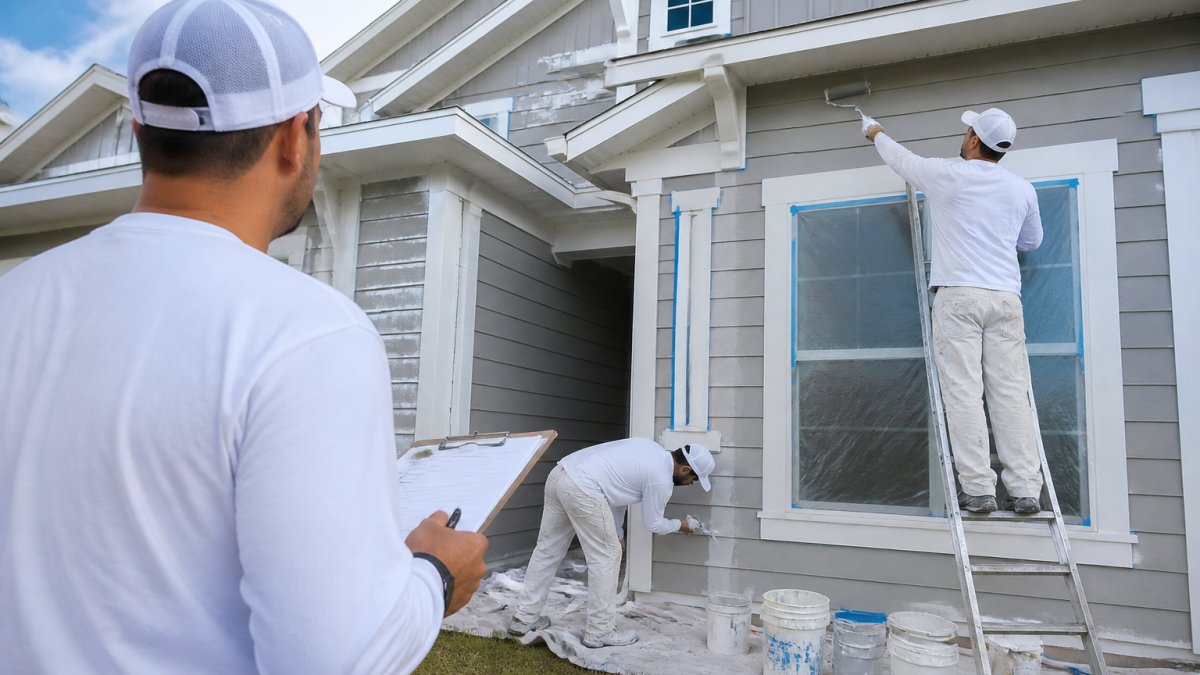
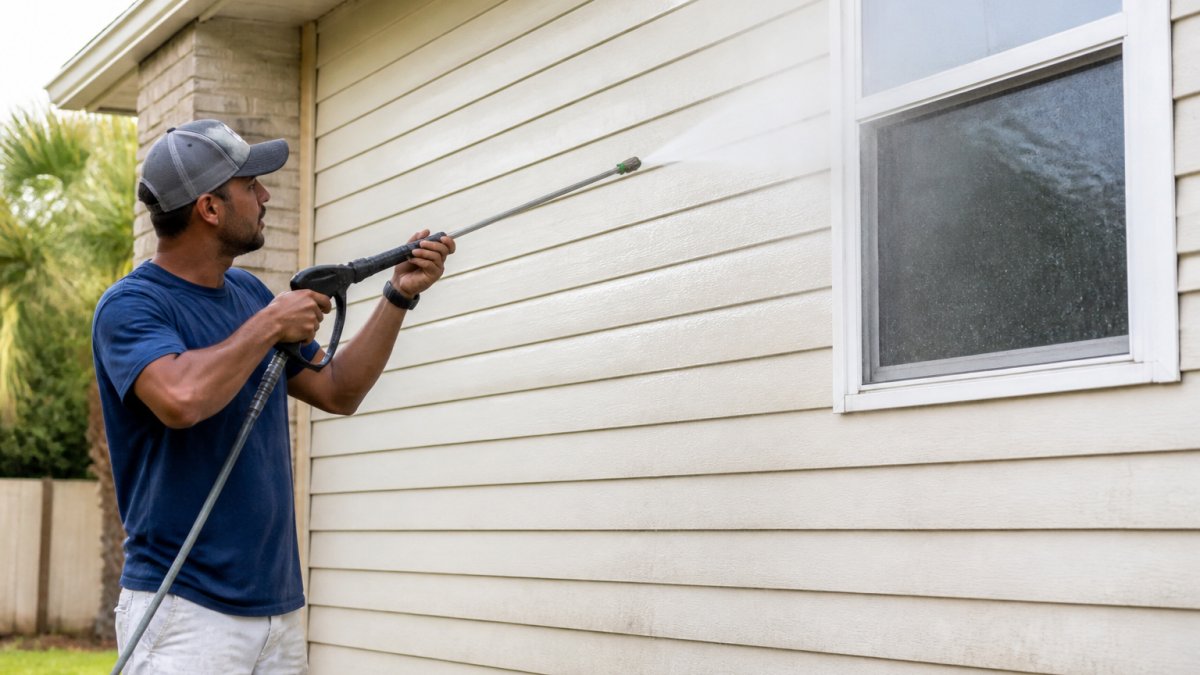
The process begins with power washing to remove dirt, mildew, and loose paint. This reveals the true surface condition and ensures primer and paint adhere properly.
Next comes scraping and sanding. Any loose or peeling paint must be removed down to solid substrate. Bare wood is sanded smooth. Cracks and gaps are caulked with paintable caulk designed for exterior use.
Priming is critical, especially on bare wood, new caulk, and any stained areas. Quality primer seals the surface and helps topcoat paint adhere and last longer. Skipping primer or using cheap primer is false economy.
Finally, finish coats are applied. Most exterior projects need two coats for even color and durability. Application method matters, brush, roller, or spray, each has advantages depending on surface texture and contractor skill.
Material Quality and Paint Durability for Coastal Climates
Not all exterior paint is created equal. Coastal environments, with salt air, humidity, and intense UV exposure, demand premium formulations. Budget paint fails faster in these conditions.
Quality exterior paint resists UV damage, moisture penetration, and salt corrosion. Premium acrylic latex paints offer excellent durability and environmental performance. Some specialty coastal formulations include additives that enhance salt resistance and mildew prevention.
Paint durability is measured in years before significant fading or failure occurs.
Primer quality matters equally. Quality primer provides better adhesion, stain blocking, and moisture protection than budget primers. Investing in quality primer and paint upfront costs more initially but reduces repainting frequency and total long-term cost.
Post-Project Maintenance and Warranty Coverage
Your paint job isn't truly complete until you understand maintenance requirements and warranty terms. Quality contractors provide clear guidance on both.
Most exterior paint warranties cover defects in materials and workmanship. A typical warranty guarantees that paint won't peel, crack, or fail due to poor application or material defects. Warranties usually exclude damage from lack of maintenance, extreme weather events, or structural issues beyond the paint system.
Post-project maintenance extends paint life significantly. Annual inspection catches small problems before they become major issues. Caulk around trim and gaps may need reapplication every 5-7 years. Cleaning the exterior annually removes mildew and salt residue that accelerates paint degradation.
Ask your contractor for a maintenance guide specific to your project. It should cover cleaning frequency, inspection points, and when to expect touch-up needs. A contractor who provides this documentation is confident in their work and committed to your long-term satisfaction.
When you hire reliable residential exterior painters, you're investing in your home's protection and appearance. The vetting process, checking licensing and insurance, reviewing references, asking detailed questions, and carefully reviewing estimates and contracts, takes time upfront but prevents costly mistakes.
Protecting your home from coastal elements requires more than standard painting. Our veteran-owned team brings military-grade discipline to every project, ensuring your exterior maintains its appearance and protective integrity for years. Get a free estimate and discover how professional exterior painting transforms your home's durability and curb appeal.
Frequently Asked Questions
What makes a painting contractor reliable?
A reliable residential exterior painter demonstrates general liability insurance, valid contractor licensing, verifiable references from coastal properties, and a clear written contract. They perform thorough surface preparation including power washing and caulking before painting, provide a detailed project timeline, and stand behind their work with warranty coverage. Ask to see proof of insurance and speak directly with past clients about their experience.
How should I compare exterior painting estimates?
Use an exterior painting estimate checklist to ensure all quotes cover the same scope: surface preparation methods, primer application, paint type and finish, number of coats, trim and fascia work, caulking and sealing, site cleanup, and warranty terms. Compare cost per square foot, but don't choose based on price alone. The cheapest estimate often means corners are cut on preparation or material quality, which leads to premature peeling in coastal humidity.
What questions should I ask before hiring a painting contractor?
Ask about their experience with coastal properties and salt air protection, how they handle surface preparation, what paint durability warranty they offer, their timeline and how they handle delays, whether they use employees or subcontractors, their cleanup process, and what happens if the paint fails within the warranty period. Request references from similar homes in your area and ask about their approach to minimizing disruption if you have tenants or active business operations.
How long does exterior house painting typically take?
A residential exterior painting project depends on home size, weather conditions, and surface preparation needs. Larger homes or those requiring extensive prep work may take longer. Quality contractors build in time for proper surface preparation, primer application, and multiple paint coats to ensure paint adhesion and durability. Always get a detailed project timeline in writing and clarify how weather delays are handled.