 how-to
7 Reasons Your Exterior Paint Keeps Peeling
Last Updated: October 28, 2026
Quick Summary
To stop exterior paint peeling, fix the moisture and adhesion problems behind it before repainting: vent bathroom and kitchen fans outdoors, keep dryers from exhausting inside, clear gutters, and wash off dirt, chalk, and mildew. Then scrape all loose paint, sand and feather the edges, and prime bare wood with an oil-based or alkyd wood primer.
- Moisture is the leading cause of exterior paint peeling, as vapor escaping from inside pushes the coating off.
- Scrape until you hit paint that resists the blade, then feather edges so they feel flat under your palm.
- Use a penetrating oil-based or alkyd wood primer on bare wood; water-based bonding primer can raise the grain.
- Build patching compound in two thin passes, because thick coats shrink and crack as they dry.
- Inspect the south and west walls first, since sun exposure breaks down the film fastest there.
Table of Contents
- Why Exterior Paint Peeling Keeps Coming Back
- What You'll Need Before You Start
- How to Scrape and Sand Exterior Paint
- The Best Primer for Peeling Exterior Paint
- Choosing an Exterior Coating That Holds Up to Salt Air and Humidity
- How to Prevent Exterior Paint from Peeling
- When to Repair It Yourself and When to Call a Professional
- Get a Free Estimate Before the Next Peeling Season
- Frequently Asked Questions
Why Exterior Paint Peeling Keeps Coming Back
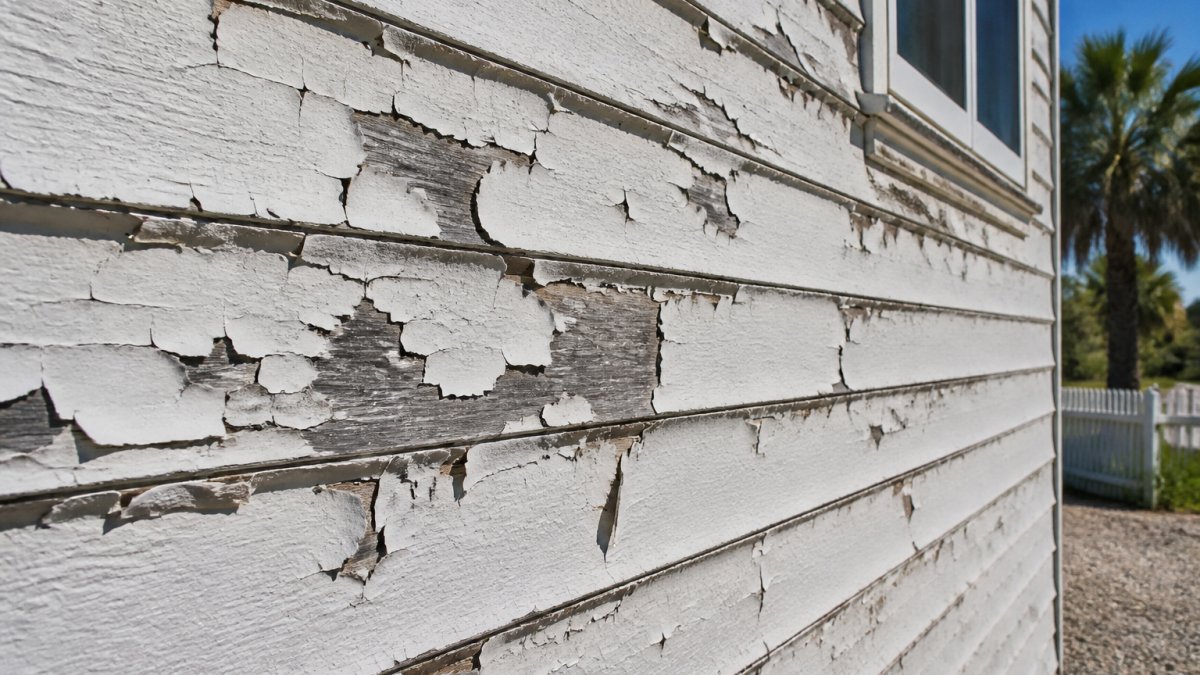
Exterior paint peeling is a coating that has lost its grip on the surface beneath it, and it usually returns because the cause was never fixed. The paint was never the problem. How to stop exterior paint peeling starts with finding out why the coating let go in the first place.
Moisture, the Root Cause Behind Most Paint Failure
Moisture is the leading cause of exterior paint peeling because water vapor escaping from inside a building pushes the coating off the wall. Paint blocks liquid water well. It traps vapor poorly. When a bathroom fan vents into the attic or a dryer exhausts into a crawlspace, that moist air travels through the wall and looks for a way out. It finds the weakest point in the paint film and lifts it.
Check these spots before you touch a scraper:
- Bathroom and kitchen fans venting into the attic instead of outdoors
- Clothes dryers exhausting into the house
- Missing or clogged gutters dumping water against the siding
- Sprinklers hitting the wall twice a day
- Cracks around windows and doors letting rain in
Surface Contamination and Poor Adhesion
Paint adhesion fails when the surface is dirty, chalky, or glossy. Exterior surfaces collect pollen, salt film, mildew, and old chalky residue. New paint bonds to that layer instead of the siding, and the whole film lets go later.
Most peeling traces back to a handful of moisture and adhesion problems, and each one has a specific spot to check.
| Problem | Cause | Where to check |
|---|---|---|
| Vapor pushing paint off | Moist air escaping from inside | Bathroom and kitchen fans venting into attic |
| Moist air through wall | Dryer exhausting indoors | Clothes dryers venting into house or crawlspace |
| Water against siding | Missing or clogged gutters | Gutters and downspouts |
| Constant wetting | Sprinklers hitting the wall | Sprinklers hitting wall twice a day |
| Rain behind siding | Cracks around openings | Cracks around windows and doors |
| Poor adhesion | Dirt, chalk, gloss, pollen, salt film, mildew | Exterior surface contamination |
What You'll Need Before You Start
- Stiff putty knife and a wide scraper
- Wire brush for stubborn flakes
- 80-grit, 100-grit, and 220-grit sandpaper
- Sanding block or pole sander
- Exterior patching compound
- Painter's caulk and a caulking gun
- Bonding primer
- Exterior latex paint rated for coastal conditions
- Quality brushes, roller, and drop cloths
- Mild detergent and a garden hose or pressure washer
How to Scrape and Sand Exterior Paint
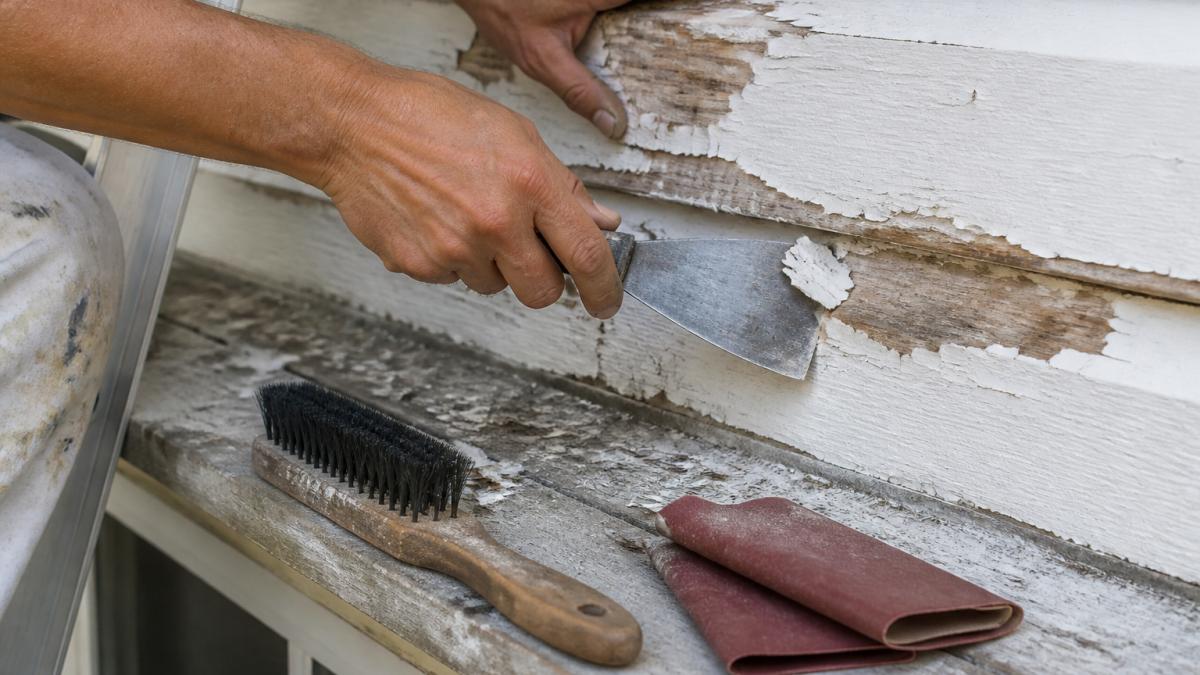
- Scrape all loose paint. Work the putty knife under the edges at a shallow angle. If it lifts easily, it was never bonded. Keep going until you hit paint that resists the blade.
- Wire brush the stubborn spots. Get into wood grain and around trim where a flat blade can't reach.
- Feather the edges. Sand the transition between bare wood and old paint so it feels flat under your palm. A ridge here shows through the new coat.
- Sand bare wood with 80-grit, then smooth with 100-grit. Finish trim and glossy areas with 220-grit.
- Wipe down and let it dry. Dust left on the surface kills adhesion.
Patching and Smoothing the Damaged Area
Watch out: patching compound applied too thick shrinks and cracks as it dries, so build it up in two thin passes rather than one heavy one.
The Best Primer for Peeling Exterior Paint
Match the primer to the substrate:
- Bare wood. Use a penetrating oil-based or alkyd wood primer. It soaks into the grain, seals it, and stops the wood from pulling moisture and oils out of the topcoat. A water-based bonding primer over bare wood can raise the grain and leave a fuzzy surface that shows through the finish.
- Previously painted wood or siding. Use a high-adhesion bonding primer. It bridges the old chalky or glossy coat and the new paint, which is where most spot repairs fail. Scuff glossy areas with 220-grit first so the primer has a mechanical bite.
- Masonry, stucco, and concrete. Use a masonry primer, ideally an alkali-resistant block filler or a breathable acrylic primer. Fresh masonry stays alkaline for months and can burn the paint film; a standard wood primer will not stop that. Do not use an oil-based primer on damp masonry, because it traps vapor and pushes the coating off from behind.
- Metal and galvanized surfaces. Use a direct-to-metal (DTM) primer or a galvanized-metal primer. Bare steel needs rust inhibition; galvanized metal needs a primer formulated to etch the zinc so paint will adhere. A wood or bonding primer will peel off galvanized metal within a season.
- Previously painted metal. Clean, scuff, and spot-prime bare areas with a DTM primer before topcoating.
Choosing an Exterior Coating That Holds Up to Salt Air and Humidity
For a deeper breakdown of product choices, our guide to the best exterior paint for Florida humidity covers which coatings survive salt air and which fade fast.
How to Prevent Exterior Paint from Peeling
Preventing exterior paint peeling comes down to keeping water out, keeping the surface clean, and painting only when the wall is dry enough to accept a coating. A little maintenance each year beats a full repaint every few seasons, but the maintenance has to target the actual failure mechanism, not just the visible flake.
Check the building envelope before you repaint
- Gutters and downspouts. Clear debris and confirm downspouts discharge away from the foundation. Water dumping against the siding is one of the most common causes of peeling at the base of a wall.
- Caulk and joints. Inspect caulk around windows, doors, corner trim, and penetrations. Failed caulk lets rain in behind the siding, where it works the paint off from the back. Recaulk before cracks open, not after.
- Roof and flashing. Check for missing shingles, failed step flashing, and stains on the siding below the roofline. A small roof leak shows up as peeling paint long before it shows up as a ceiling stain.
- Drainage and grade. Confirm the ground slopes away from the wall and that sprinklers do not hit the siding. Constant wetting keeps the substrate above the moisture content paint can tolerate.
- Interior vapor sources. Bathroom and kitchen fans should vent outdoors, not into the attic. Clothes dryers should exhaust outside the building. A dryer venting into a crawlspace pushes moist air through the wall and lifts the paint film from behind.
- Damp siding. Press a moisture meter or a piece of plastic sheeting against the wall for a day. If condensation forms under the plastic, the substrate is holding moisture and is not ready for paint.
Test before you paint
- Dryness. Bare wood should read in the normal range on a moisture meter, and masonry should look uniformly dry with no dark patches. Avoid painting within 24 hours of rain or when the wall is in direct sun and hot to the touch.
- Cleanliness. Rub a dark cloth across the wall. A powdery residue means the old coating is chalking and needs washing before anything else happens. Mildew shows as dark streaks and needs a mildewcide wash, not just detergent.
- Soundness. Scrape a test spot. If paint lifts easily, the bond is already broken and the area needs full prep, not a touch-up.
Maintenance that actually prevents peeling
Inspect the south and west walls first. Sun exposure breaks down the film fastest there, and that is where peeling paint usually starts.
When to Repair It Yourself and When to Call a Professional
Small isolated spots on a ground-floor wall are a reasonable DIY repair. Anything bigger, or anything recurring, is a signal to bring in help. Once you've decided to hire, you can review the company's premium painting services for every property. If you're weighing DIY against hiring, see what exterior house painting costs in Florida.
Get a Free Estimate Before the Next Peeling Season
Signature Coastal Coatings is veteran-owned and brings more than a decade of trade experience to coastal homes and commercial buildings. We keep our project load limited so every job gets full attention, and we prep surfaces meticulously before a brush ever touches the wall. Our finishes are built for heat, humidity, and salt air.
Then request a free estimate.
Frequently Asked Questions
Can I just paint over old peeling paint?
No. Painting over loose or flaking paint traps the failure underneath, and the new coat will lift off with the old one within a season or two. Purdue Extension advises scraping away all loose paint first before any repair. Scrape down to bare wood where the coating has already failed, sand the edges smooth, and prime the exposed area so the new exterior paint has a sound surface to bond to.
Do you need to prime exterior wood after scraping peeling paint?
Yes, whenever you expose bare wood. Primer seals the raw surface and gives the topcoat something to grip, which is exactly what failed the first time. Choose a bonding primer for glossy or previously painted areas and a wood-specific primer for bare siding, fascia board, and trim. Let it cure fully per the label before topcoating, and avoid painting when rain is expected within the coating's dry time.
Why does my paint peel so easily?
The most common exterior paint peeling causes are moisture trapped behind the coating and poor surface preparation. Water vapor pushing out from inside the wall, leaks around trim, or a dirty, chalky surface all break paint adhesion. Before repainting, check for water damage, caulk gaps, and failing sealant around windows and joints. Fixing the moisture source matters more than the paint brand you buy.
When should peeling exterior paint be handled by a professional?
Call a professional when peeling covers large sections of the exterior surface, when the paint is failing on multiple sides of the building, or when the home was built before 1978 and may contain lead-based paint. Spot-painting isolated areas is reasonable for a homeowner, but widespread adhesion failure usually points to a moisture or substrate problem that needs diagnosis before any repaint.
Paint failure rarely fixes itself, and every season you wait lets moisture work deeper into the siding. Signature Coastal Coatings handles the diagnosis, the prep, and the coating in one pass, with veteran-owned discipline, meticulous surface preparation, and finishes made for salt air and humidity. Get started with Signature Coastal Coatings and stop repainting the same wall every few years.