 ultimate-guide
Professional Exterior Painting Cost Estimate 2026 Guide
Last Updated: November 5, 2026
Quick Summary
A professional exterior painting cost estimate is an itemized, written projection of labor, materials, preparation, and repairs for your specific home, not a generic per-square-foot guess. Published 2026 figures put the average project at $3,177, with a range of roughly $1,800 to $4,500 and $1.50 to $4.00 per square foot. Your exterior painting cost depends on measured surface area and observed conditions.
- Confirm whether a per-square-foot figure measures floor area, paintable wall area, or total exterior surface area.
- National ranges typically exclude carpentry repair, lead-safe practices, and height access equipment.
- Two finish coats over a properly primed surface is the common standard for a durable job.
- Ask for the paint product line by name and the number of finish coats in writing.
- Repairs should be priced separately with per-item rates, not as a lump sum.
Table of Contents
- What a Professional Exterior Painting Cost Estimate Covers in 2026
- Per-Square-Foot Pricing and the National Average
- Labor Cost to Paint Exterior of House
- Cost to Paint Exterior of House 1,000 Sq Ft
- Cost to Paint Exterior of House 3,000 Sq Ft
- Factors That Move Your Exterior Painting Cost Estimate
- Exterior Painting Estimate Checklist for Comparing Quotes
- Requesting Your Free Estimate
- Frequently Asked Questions
What a Professional Exterior Painting Cost Estimate Covers in 2026
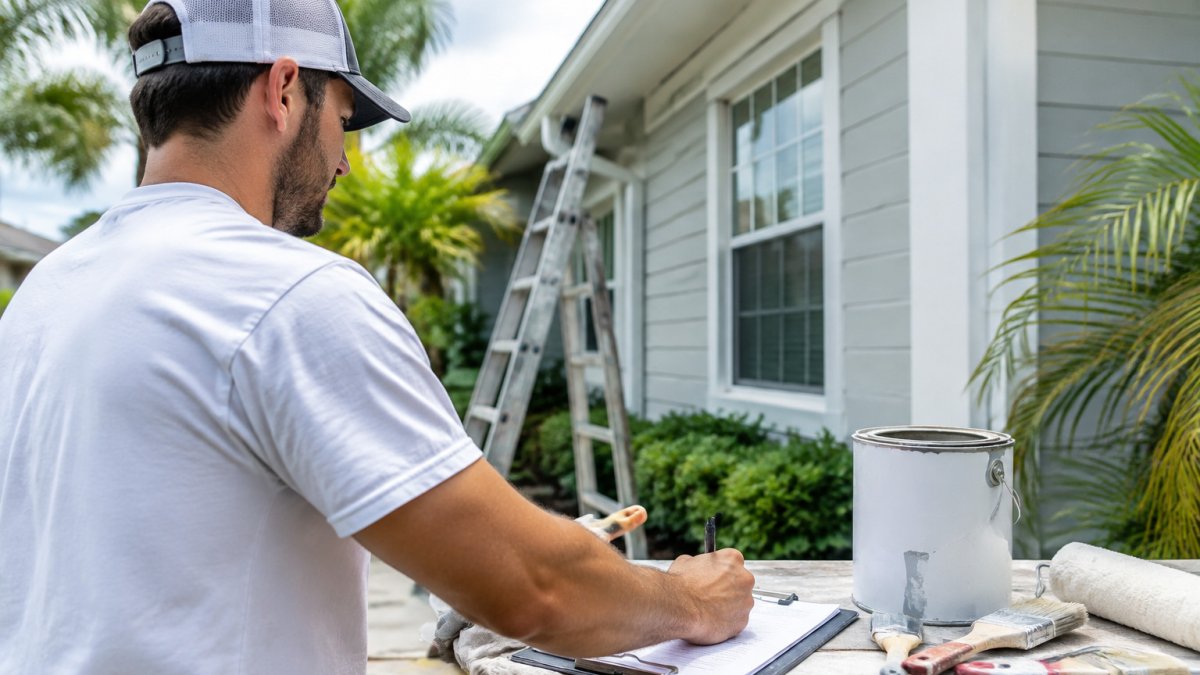
A professional exterior painting cost estimate is an itemized, written projection of labor, materials, preparation, and repairs for a specific home, not a generic per-square-foot guess. A professional estimate is built from measured surface area and observed conditions, because national ranges only tell you where the conversation starts.
Below, we break down how 2026 pricing actually works, what drives your number up or down, and how to compare quotes line by line instead of staring at three totals that seem unrelated.
Per-Square-Foot Pricing and the National Average
NerdWallet's exterior painting cost analysis put the average project at $3,177, with a range of roughly $1,800 to $4,500 and $1.50 to $4.00 per square foot. CertaPro Painters reports a wider $3,000 to $15,000 range once surface type and preparation enter the picture.
That is the part most cost articles skip: a per-square-foot number is only meaningful if you know what is being measured and what is being left out.
What the Square Footage Actually Measures
Three different denominators get quoted as "per square foot," and mixing them up is the most common reason a homeowner's math does not match a contractor's quote:
- Floor area of the home. A 2,000-square-foot house is priced against its interior footprint. This is the number in most national averages, and it is a rough proxy at best, because a one-story ranch and a two-story colonial with the same floor area have very different amounts of wall.
- Paintable wall area. Measured wall surface excluding windows, doors, and openings. This is closer to what a crew actually coats, and it is the number a careful estimator derives from elevation measurements.
- Total exterior surface area. Walls plus trim, fascia, soffits, doors, shutters, and any detached structures. This is the most defensible basis for an itemized estimate because every coated surface is counted.
A quote built on floor area and a quote built on total surface area can differ substantially for the same house. Before you compare two per-square-foot figures, confirm they use the same denominator.
What the National Ranges Exclude
Published averages typically assume a home in fair condition with light preparation, one primer coat where needed, and two finish coats of a mid-grade product. They generally do not include:
- Carpentry repair, siding replacement, or rot remediation
- Lead-safe practices on pre-1978 homes, which add containment, cleaning, and certification costs under EPA rules
- Height access beyond a standard two-story ladder reach, such as lifts or scaffolding
A bid that lands below the national range is usually a bid with a shorter exclusion list, not a better price.
Adjusting a National Range for Your Market
There is no single national labor rate, so treat any published range as a starting point and apply three adjustments:
- Labor-rate index. Metro labor markets with high living costs and strong construction demand run above the national midpoint; rural markets with ample crew availability run below it. Ask two or three local contractors for their hourly labor rate and compare it to the assumption behind the national figure.
- Climate and exposure. In coastal and humid climates, salt air, sun, and moisture drive more frequent recoating and more surface prep per square foot. In dry, sunny climates, UV chalking and wood checking add prep. Both push the local number above a temperate-climate average.
- Access and site conditions. Steep lots, tight side yards, multi-story elevations, and heavy landscaping slow production and raise labor per square foot regardless of region.
A practical method: take the national midpoint, multiply by the ratio of your local labor rate to the national assumed rate, then add a prep allowance based on what an on-site inspection finds.
For local context, see our breakdown of Florida exterior painting cost and how coastal conditions shift the numbers.
Published 2026 figures give a starting range, but each source measures scope differently.
| Source | Average or range | Per square foot |
|---|---|---|
| NerdWallet | $3,177 average; $1,800 to $4,500 range | $1.50 to $4.00 |
| CertaPro Painters | $3,000 to $15,000 range | Not stated |
| Homewyse (May 2026) | Not stated | $2.20 to $4.37 |
Labor Cost to Paint Exterior of House
Labor is often a large share of an exterior painting estimate, and it is the line item homeowners understand least. Crews price labor by the hour and by production rate: how many square feet a painter can prep, prime, and coat in a day on your specific surfaces.
Two-story homes, steep rooflines, and heavy scraping all slow production, which raises the labor share. When a quote looks unusually low, labor hours are usually where it was cut.
Cost to Paint Exterior of House 1,000 Sq Ft
A 1,000-square-foot home usually lands at the lower end of published ranges because it has less surface area, fewer stories, and less trim. Estimates for homes of this size vary widely, with the lower end typically applying to simpler, single-story structures.
Condition still decides the final number. A small home with failing caulk and bare wood can cost more to paint than a larger home in good repair.
Cost to Paint Exterior of House 3,000 Sq Ft
At 3,000 square feet, surface area, story count, and prep volume push projects toward the middle and upper bands. A home this size with two stories, extensive trim, and repairs will typically sit above the national average.
Expect the estimate to be longer, too. More surface means more line items: fascia, soffits, doors, windows, and any siding transitions.
Factors That Move Your Exterior Painting Cost Estimate
Five variables drive most of the variance in any exterior painting cost estimate: home size, surface condition, coating quality, access difficulty, and regional labor rates. Two homes of identical square footage can differ by thousands of dollars based on these alone. What follows is how each one actually changes the number, so you can see which levers apply to your house.
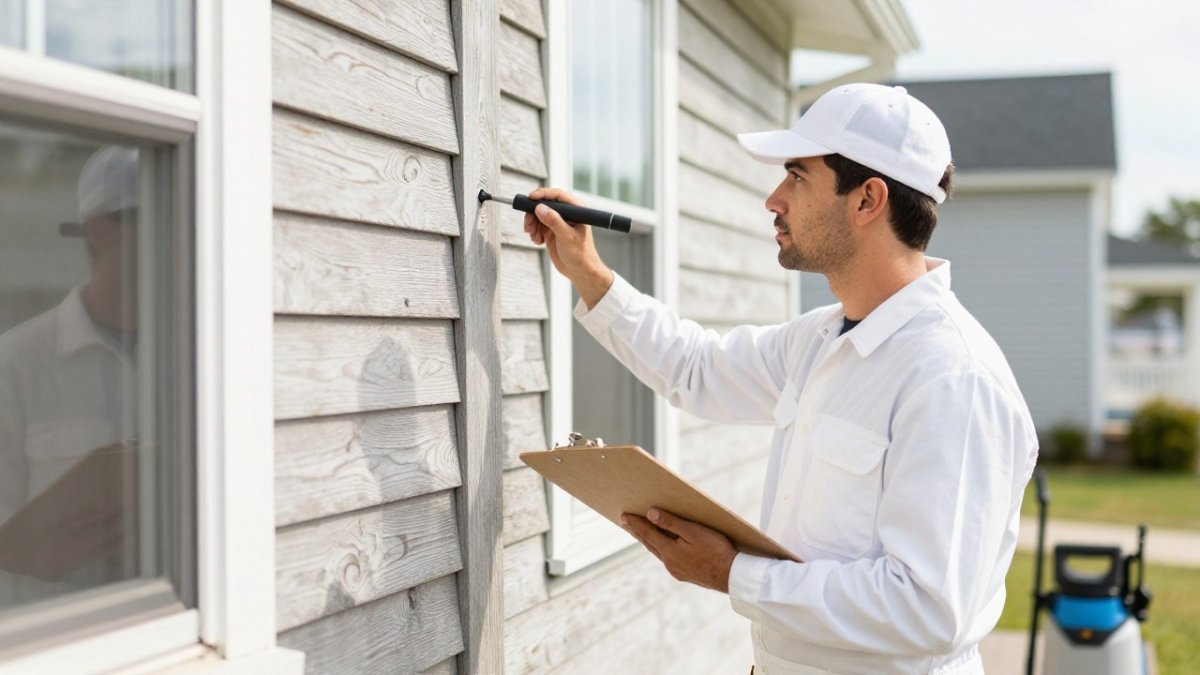
Surface Type and How It Changes the Estimate
Each exterior substrate changes both the labor rate and the amount of paint required, because texture and porosity determine how much coating the surface absorbs.
- Wood siding and trim. The most prep-intensive common surface. Expect scraping, sanding, spot priming of bare and knotty areas, and caulking at joints. Checked or cupped boards may need replacement before painting.
- Stucco. Porous and often cracked. Prep includes patching hairline and structural cracks, and the first coat is typically a high-build or elastomeric product applied heavier than a standard acrylic. Texture, especially heavy lace or dash finishes, increases both paint volume and the labor to work it in.
- Brick and masonry. Often best left unpainted, but when it is painted, the surface is highly absorbent and may need a masonry primer and a breathable coating. Efflorescence and mortar deterioration must be addressed first, or the coating will fail.
A useful rule of thumb: the rougher and more porous the surface, the more the estimate shifts from labor toward material, and the more coats the first application requires.
Paint Quality and Number of Coats
Coating grade and coat count are the two line items most often trimmed to lower a bid. A premium exterior acrylic typically carries a longer warranty and better fade and mildew resistance than a builder-grade product, but it costs more per gallon and may cover in fewer coats. Two finish coats over a properly primed surface is the common standard for a durable job; a single coat over a color change or a dark-to-light transition will show through and fail early.
Ask for the product line by name and the number of finish coats in writing. A quote that says "two coats" without naming the product is not comparable to one that specifies both.
Preparation and Repairs: A Decision Guide
Prep is not one task; it is a sequence of decisions, and each one changes the estimate. Use this guide to see what your house likely needs:
- Washing. Always required to remove chalk, dirt, mildew, and salt film. Skipping it is the most common cause of premature peeling.
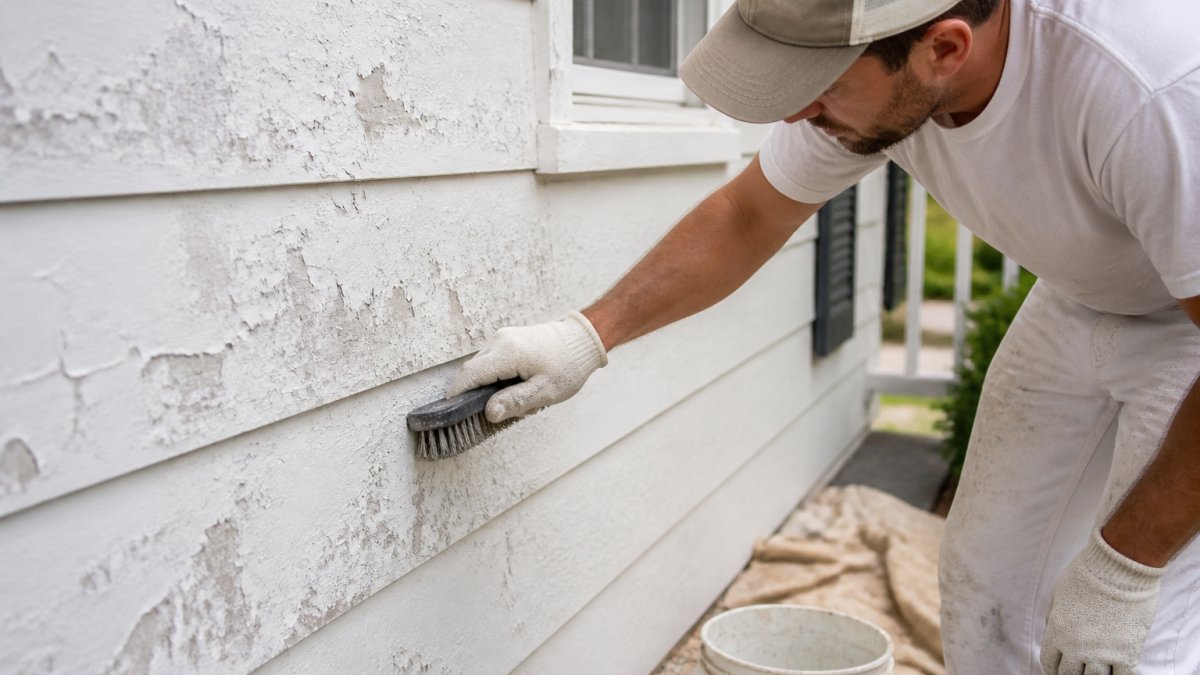
- Scraping and sanding. Required wherever coating is loose, cracked, or blistered. The more failing paint, the more labor hours.
- Caulking. Required at joints, seams, and penetrations. Failed caulk lets water in and is a frequent source of hidden rot.
Watch out: a bid that prices repairs as a lump sum without a per-item rate gives you no way to evaluate change orders once the crew opens up a wall.
Access, Stories, and Site Conditions
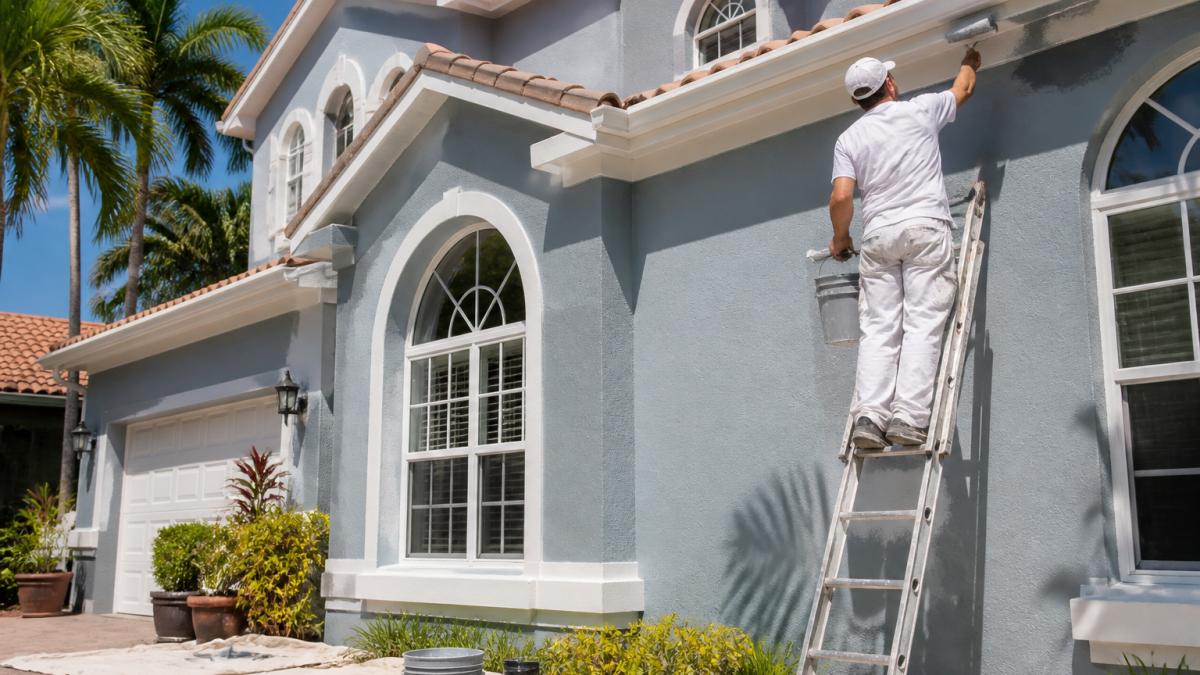
Height and access change labor productivity more than most homeowners expect. A single-story ranch can often be reached from ladders and extension poles; a two-story home with steep gables may require scaffolding or a lift, and that equipment carries rental and setup time. Tight side yards, steep grades, and dense landscaping slow movement and add protection and cleanup time. These costs are legitimate and should appear as their own line items rather than being buried in a per-square-foot rate.
Regional Labor Rates
Labor is a large share of a typical exterior painting estimate, so regional wage differences can move the total more than paint prices do. A national average blends high-cost metro markets with lower-cost rural ones; your local number should be built from local crew rates, local demand, and the season.
Our guide to surface preparation for painting explains what proper prep involves, and premium versus standard exterior paint covers how coating grade affects longevity and cost.
Exterior Painting Estimate Checklist for Comparing Quotes
Use this checklist to compare contractor quotes on equal terms:
- Measured square footage and surface area stated in writing
- Preparation scope itemized: pressure washing, scraping, sanding, caulking, patching
- Primer specified by product name and coverage
If a quote skips any of these, ask for it in writing. For vetting guidance, read how to hire reliable exterior painters.
Requesting Your Free Estimate
The only reliable exterior painting cost estimate is one built from your actual surfaces. A written, itemized quote removes the guesswork that national averages cannot.
Signature Coastal Coatings is veteran-owned, licensed, and insured, with over ten years in the trades and specialized knowledge of Florida's coastal climate. Our project load is limited to protect quality, and pricing is kept transparent.
Request a free estimate and get a clear, no-obligation number for your property.
Frequently Asked Questions
How much should it cost to paint a 2,000 square foot house exterior?
Exterior painting cost depends on surface area, surface type, preparation needs, and paint quality, and it is best determined from a written quote for your home. Your actual exterior painting cost depends on surface type, preparation needs, number of stories, and paint quality. Coastal homes exposed to salt air often land toward the higher end because prep work takes longer.
How much of an exterior painting estimate is labor?
Labor typically makes up the largest share of a professional exterior painting cost estimate, often 60 to 80 percent of the total. The labor cost to paint the exterior of a house covers pressure washing, scraping, sanding, caulking, patching, priming, masking, and the hours spent applying coats. Two-story homes, steep rooflines, and heavy prep work push labor hours up. Material costs for paint, primer, and supplies make up the smaller portion. Ask each contractor to break out labor and materials separately so you can compare quotes fairly.
What should a professional exterior painting quote include?
A complete quote should list the exterior surface area being painted, the number of coats, primer type, and the specific paint brand and product line. It should itemize preparation steps such as pressure washing, scraping, sanding, caulking, and patching, plus any surface repairs. Ask for a line for trim, fascia, soffits, doors, and windows. The quote should also state the project timeline, payment schedule, warranty terms, and proof of licensing and insurance. An exterior painting estimate checklist helps you confirm nothing is missing before you sign.
How can homeowners compare exterior painting estimates?
Compare quotes line by line, not just by the bottom number. A lower bid often skips primer, cuts coats, or excludes repairs. Check that each quote covers the same surface area, the same number of coats, and the same preparation steps. Ask whether scaffolding or equipment is included, and confirm the warranty in writing. The cost to paint the exterior of a house 1,000 sq ft from one contractor may look cheaper only because prep is excluded. Use an exterior painting estimate checklist to score each bid on equal terms.
What factors affect a professional exterior painting estimate?
Home size and exterior surface area drive the base price. Surface type matters: wood siding, vinyl siding, stucco, and brick each need different prep and products. Condition adds cost when scraping, sanding, patching, or repairs are needed. The number of stories affects accessibility, scaffolding, and labor hours. Paint quality and the number of coats change material costs. Regional pricing, weather conditions, and the contractor's warranty also shape the final figure. In coastal areas, salt air and humidity make durable coatings and thorough prep worth the investment.
Does repainting improve resale value?
A fresh exterior paint job is one of the more reliable ways to improve curb appeal before a sale. Buyers notice peeling paint and chalky siding immediately, and a clean, well-prepped finish signals a maintained home. The return on investment varies by market and condition, so treat repainting as both a protective measure and a resale value boost. For coastal properties, durable coatings that resist salt air and humidity can also reduce how often you repaint, lowering the cost over the life of the home.
Getting a straight answer on exterior painting cost should not require three rounds of phone tag. Signature Coastal Coatings provides itemized estimates, meticulous surface preparation, and finishes built for coastal conditions, with clear communication from first walkthrough to final inspection. Get started with Signature Coastal Coatings and request your free, no-obligation estimate today.