 how-to
Schedule Coastal Home Exterior Inspection: Complete Guide
Table of Contents
- Why Schedule a Coastal Home Exterior Inspection
- How Often to Inspect a Coastal Home Exterior
- Best Timing: When to Schedule Your Inspection
- Coastal Home Exterior Inspection Checklist
- Home Inspection Scheduling Checklist: Preparation and Booking
- Questions to Ask a Home Inspector Before Booking
- After Your Coastal Exterior Inspection: Next Steps
- Frequently Asked Questions
Last Updated: October 17, 2026
Why Schedule a Coastal Home Exterior Inspection
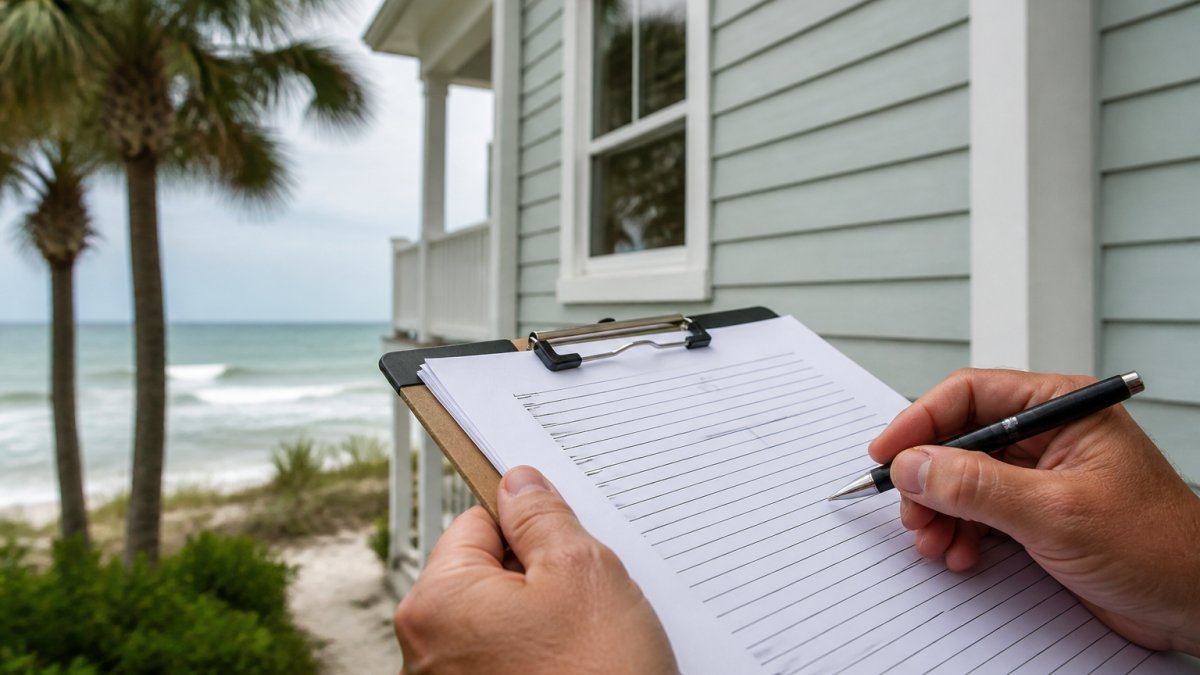
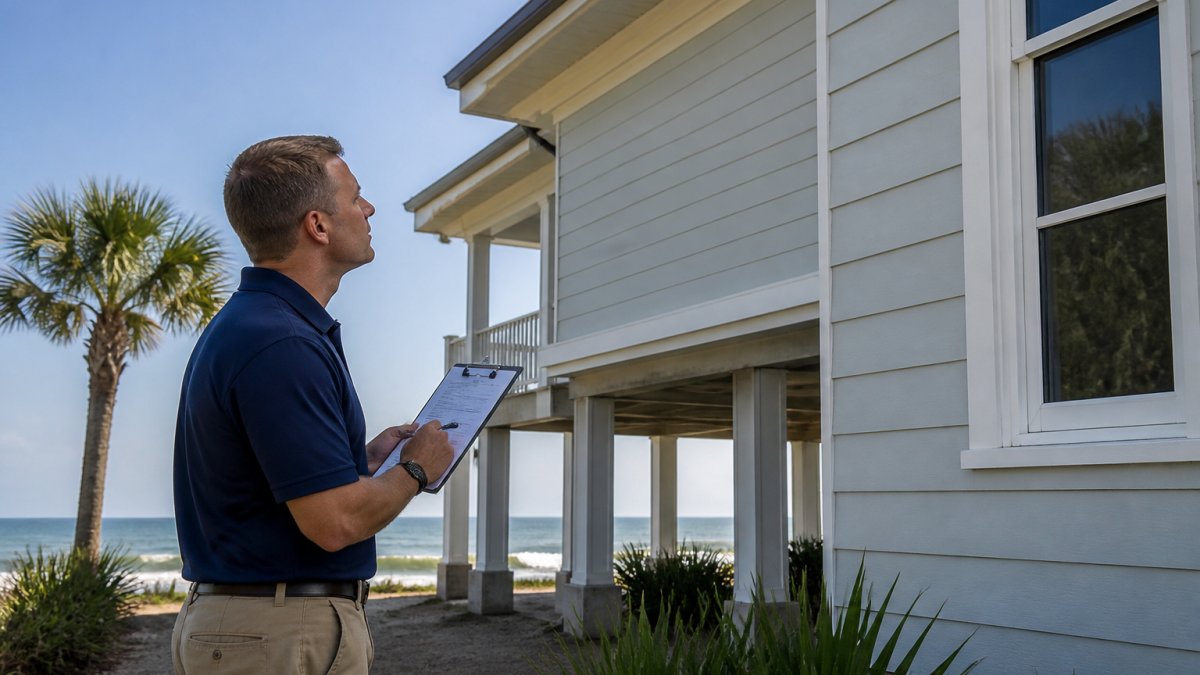
A coastal home exterior inspection evaluates outside surfaces, structural elements, and systems exposed to salt air, humidity, and weather, focusing on damage patterns unique to saltwater environments.
The reason to schedule coastal home exterior inspection work is simple: salt air corrodes materials faster than inland conditions. Siding deteriorates, metal rusts, shingles degrade, and moisture penetrates deeper.
Most homeowners wait for visible damage, by which point the problem has spread beneath the surface.
How Often to Inspect a Coastal Home Exterior
How often you schedule coastal home exterior inspection depends on age, condition, and exposure: a waterfront property faces more aggressive salt air than one a few blocks inland.
In active coastal zones, inspect annually: winter storms, spring salt spray, and summer heat all leave marks.
After hurricanes, nor'easters, or severe storms, schedule an inspection immediately.
New construction or recently painted coastal homes can start at 24-month intervals, but only with proper coastal-grade preparation and materials.
Best Timing: When to Schedule Your Inspection
Timing depends on three variables: what triggered the inspection, how exposed the property is to salt and wind, and what deadline you face (insurance, closing, or warranty). Treat the calendar as a secondary filter.
Start with the trigger, then pick the season
Most coastal exterior inspections are scheduled for one of five reasons. Each has its own timing logic:
- Routine maintenance. Book a dry stretch in the shoulder seasons: late fall (September-November) to document summer salt accumulation before winter storms, or April-May to capture winter damage before summer heat. Fall inspections surface the most actionable coating and sealant failures.
- Post-storm check. Schedule once it is safe and surfaces have dried. Salt spray forces moisture into cracks that do not leak until the next rain, and roof damage often is not visible from the ground. Do not wait for a leak.
- Pre-purchase. Schedule during the inspection contingency period with enough lead time to negotiate, and book the exterior inspection alongside the general home inspection rather than sequentially.
- Insurance or wind mitigation. Many carriers require a wind mitigation or four-point inspection before binding or renewing a coastal policy. Work backward from your policy date and confirm which form the carrier accepts before you book.
- Post-project or warranty. After exterior work or a coating, schedule the first inspection about 30 days after completion so materials have cured and defects are visible while the warranty is open.
Match timing to exposure, not just the calendar
A property on the water and one three blocks inland do not share the same urgency. Use exposure as a tiebreaker:
- Direct waterfront or open exposure. Annual inspections, plus a second look after any named storm or nor'easter. Salt deposition and wind-driven rain are continuous, and coatings degrade faster.
- Near-coastal but sheltered. Every 18 months is a reasonable baseline, tightened to annual once the property passes roughly five years of age or shows visible coating wear.
- New construction or recent full exterior refinish. Up to 24 months initially, but only if coastal-grade materials and preparation were used. Return to annual once the protective system has aged.
Weather windows that actually work
Inspectors need dry surfaces to evaluate roofing, siding, flashing, and drainage; wet materials hide staining and skew moisture-meter readings. Avoid active storm season, the days after heavy rain, and extreme summer heat.
Deadlines to work backward from
Three deadlines drive most scheduling decisions:
- Insurance renewal or binding. Confirm the required inspection type and deadline, then book two to three weeks ahead so the report is in hand before the policy date.
- Real estate contingency. Book the exterior inspection alongside the general inspection and confirm turnaround in writing before you commit.
- Warranty expiration. For recent exterior work, calendar the 30-day post-completion inspection when the project closes out.
If unsure which trigger applies, default to the earliest deadline and highest exposure. A post-storm inspection that doubles as a pre-renewal wind mitigation inspection is often the most efficient single booking.
Coastal Home Exterior Inspection Checklist
This checklist covers what to confirm before you book, what the exterior-only scope includes, and where the limits are so you know when a full inspection or specialist is the right call.
Before you book: the scheduling checklist
Run through these before you call; getting them right shortens the inspection and improves the report.
- Define the purpose. Routine maintenance, post-storm, pre-purchase, insurance or wind mitigation, or post-project warranty. The purpose determines scope, report format, and deadline.
- Confirm the scope in writing. Ask whether the booking is exterior-only or a full home inspection, and whether roof, attic, crawlspace, garages, decks, and outbuildings are included.
- State the property profile. Age, square footage, stories, roof type and pitch, siding material, and distance from the shoreline.
- Disclose known issues. Prior leaks, repairs, coating work, and anything you have noticed, so the inspector focuses instead of rediscovering.
- Confirm access. Roof access method, gate codes, lockbox, pets, and attic or crawlspace entry.
- Ask about report turnaround and format. Get the delivery window and confirm the report includes photos and prioritized findings, not just pass/fail.
- Verify credentials and insurance. Confirm state licensing where required, liability coverage, and certification such as ASHI membership.
- Ask about weather policy. Coastal inspections get rained out; know the reschedule terms before you book.
What an exterior-only inspection covers
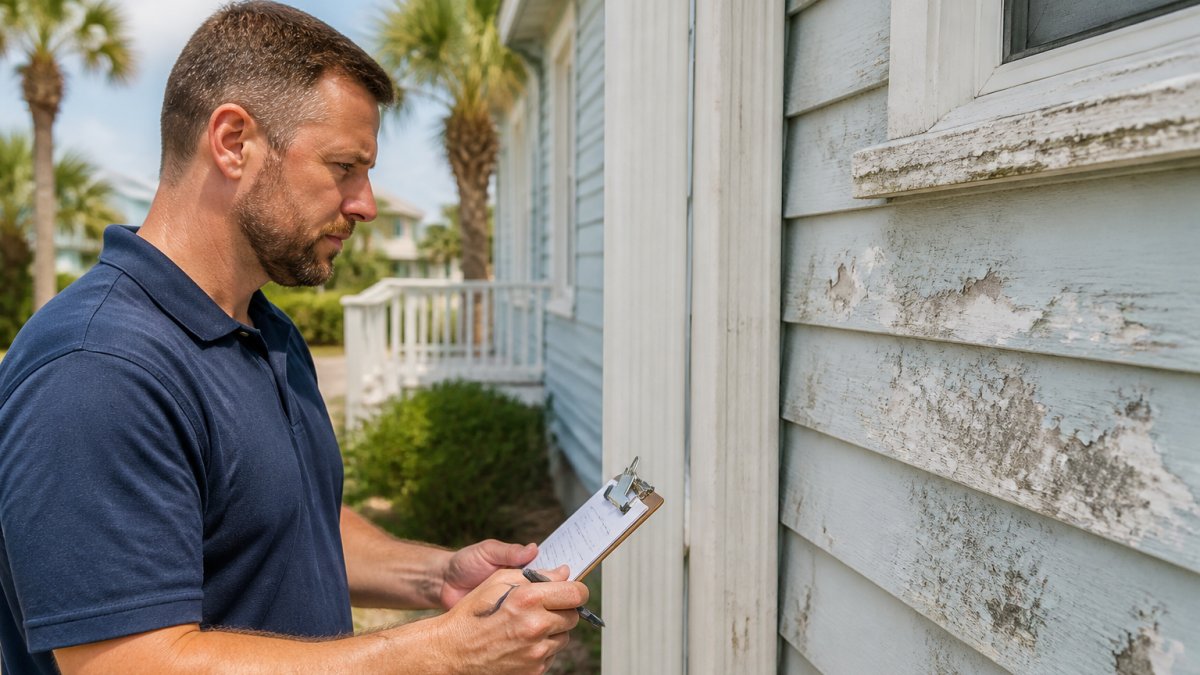
An exterior inspection evaluates the building envelope and the site conditions affecting it. A thorough coastal exterior inspection typically includes:
- Roof covering and flashing. Shingle, tile, or metal condition; flashing at walls, chimneys, and penetrations; corrosion or lifted or missing material.
- Gutters and downspouts. Attachment, corrosion, and whether discharge is directed away from the foundation.
- Siding, trim, and exterior surfaces. Coating failure, soft spots, rust, separation, and caulking at windows, doors, and penetrations.
- Windows and doors. Frame and sill condition, seal failure such as fogging, weatherstripping, and operation.
- Foundation and grading. Visible foundation condition, efflorescence, and whether the ground slopes away.
- Exterior penetrations. Vents, light fixtures, outlets, and hose bibs, and whether seals are intact.
- Attached structures. Decks, porches, stairs, railings, garages, and outbuildings, if in the agreed scope.
What it does not cover
An exterior-only inspection generally does not include:
- Interior systems. HVAC, electrical, plumbing, and appliances are outside an exterior-only scope.
- Full interior moisture or mold assessment. An exterior walk cannot confirm interior mold or hidden moisture; that requires an indoor inspection or specialist.
- Destructive or invasive testing. Inspectors do not open walls or remove siding unless explicitly contracted.
- Engineering or structural certification. A general inspector can flag a concern but cannot provide a stamped structural opinion.
- Specialist assessments. Sewer scope, chimney sweep, pest or termite, and geotechnical or flood-zone determinations are separate services.
When to upgrade to a full inspection or a specialist
Book beyond exterior-only when:
- You are buying the property and need a complete picture of systems and interior conditions.
- You suspect interior moisture, mold, or hidden rot behind siding or under flooring.
- An insurer or lender requires a full home inspection or a specific wind mitigation or four-point form.
- The exterior inspection flags a structural concern needing an engineer.
- The property has a history of flooding, repeated leaks, or unresolved repair disputes.
What to have ready on inspection day
Clear vegetation and stored items from walls, unlock gates, provide attic and crawlspace access, and have prior reports, repair records, and warranty documents ready. Plan to be present so you can ask questions.
Home Inspection Scheduling Checklist: Preparation and Booking
Once you decide to schedule coastal home exterior inspection services, preparation determines how thorough and useful the inspection becomes.
Finding and Vetting Your Inspector
Not all home inspectors understand coastal assessment.
Request references from recent coastal inspections and ask whether the inspector caught problems later confirmed and whether the report was detailed enough to guide repairs.
Verify licensing and insurance: check your state's licensing board, confirm liability coverage, and ask about certification through organizations like the American Society of Home Inspectors (ASHI).
For commercial properties, look for inspectors experienced in commercial building assessment and wind mitigation, which insurers often require for coastal commercial buildings.
Preparing Your Property
Clear access to all exterior areas: trim vegetation from siding, remove items stored against walls, and unlock gates the inspector needs. An inspector cannot evaluate what they cannot reach.
Provide attic, basement, and crawlspace access, which reveal water intrusion patterns an exterior inspection alone misses, and turn off security systems that might interfere.
Have documentation ready: prior reports, repair records, warranty information, and known issues. This context helps the inspector focus on areas of concern.
What to Expect During the Inspection
A thorough coastal home exterior inspection typically takes two to four hours, covering roof, siding, windows, doors, foundation, grading, gutters, and exterior penetrations.
Expect photographs, notes, and hands-on checks of roof security, gutter flow, and window operation, plus tools like moisture meters to detect hidden intrusion.
Plan to be present: you'll learn what is being evaluated and why, and a good inspector explains issues in plain language and shows you the problems.
Questions to Ask a Home Inspector Before Booking
How many coastal property inspections have you completed in the past two years? What coastal damage patterns have you documented?
Do you have wind mitigation experience?
What's your process for identifying moisture intrusion? Can you use moisture meters or thermal imaging?
How detailed is the report?
What's your availability? Can you schedule within my timeframe, and do you offer same-day reporting?
After Your Coastal Exterior Inspection: Next Steps
Once you receive your inspection report, don't file it away. Use it as your action plan.
Prioritize by urgency: water intrusion and structural concerns need immediate attention, while cosmetic wear can wait.
Get repair estimates from contractors experienced with salt damage repair and coastal-grade materials.
Address moisture issues first, since water intrusion spreads quickly and causes exponential damage.
Consider a protective coating strategy after repairs.
Scheduling a coastal home exterior inspection is the foundation of protecting your property investment. When you're ready for exterior protection and repairs, Signature Coastal Coatings provides the expertise coastal properties demand, combining meticulous surface preparation with coastal-grade materials designed to withstand salt air, humidity, and waterfront stresses.
Frequently Asked Questions
How long does a coastal home exterior inspection typically take?
A thorough exterior inspection of a coastal home usually takes two to four hours, depending on property size, condition, and accessibility. Salt exposure, moisture damage, and structural concerns require detailed evaluation. Schedule sufficient time, rushing an inspection means missing critical issues that could cost thousands in repairs. Plan for the inspector to examine the roof, siding, windows, doors, foundation, drainage systems, and HVAC components.
What should I prepare before scheduling a coastal home exterior inspection?
Clear access to all exterior areas: trim vegetation away from siding, ensure gutters are visible, and remove obstacles around the foundation and drainage systems. Document any known issues or recent repairs. For real-estate transactions, confirm the inspection appointment with your agent and ensure the seller provides access.
How often should a coastal home exterior be inspected?
Coastal properties should be inspected annually or after severe weather events. Salt air, humidity, and storm exposure accelerate deterioration of roofs, siding, and drainage systems. If you've noticed water stains, peeling paint, rust, or mold, schedule an inspection immediately rather than waiting. Before selling or buying a coastal property, a professional inspection is essential to assess structural integrity, moisture intrusion, and wind mitigation readiness.
What questions should I ask a home inspector before booking?
Ask about their licensing, certifications, and experience with coastal properties. Confirm they inspect exterior structures, roof condition, moisture intrusion, and foundation integrity. Request their inspection duration and report turnaround time. Ask if they can identify salt damage, mold, and wind mitigation concerns. Verify their liability insurance and cancellation policy. For coastal homes, prioritize inspectors familiar with salt air corrosion and Florida weather risks.