 comparison
Is Professional Interior Painting Worth the Cost?
Last Updated: October 26, 2026
Quick Summary
Professional interior painting is worth the cost when prep is heavy, ceilings are high, or the finish must last, since pro quotes bundle labor, prep, and materials. DIY wins on total cost for a single bedroom in good condition. Compare each path's cost per year of finish life.
- Hiring interior painters nationally runs about $605 to $2,464, with most customers paying around $1,200.
- Professional interior painting costs roughly $2 to $6 per square foot, with a standard-room average near $624.
- A standard room takes a professional crew a day or less, while DIY usually stretches across a weekend or more.
- Skipping primer on bare or patched drywall is the shortcut that most often causes early peeling.
- Ask for a written quote that itemizes labor, materials, and prep rather than a lump sum.
Table of Contents
- The Real Cost of Interior Painting: Professional vs. DIY
- Professional Painter vs. DIY Cost: A Side-by-Side Comparison
- What Professional Painters Do Differently
- How Long Does It Take to Paint a Room?
- How to Choose a Professional Painter
- Break-Even Scenarios: When DIY Saves and When Professional Painting Pays Off
- Get a Free Estimate for Your Interior Painting Project
- Frequently Asked Questions
The Real Cost of Interior Painting: Professional vs. DIY
The answer to whether professional interior painting is worth the cost depends less on the price tag and more on what that price includes. According to Thumbtack's interior house painting cost data, the national range to hire interior painters runs from about $605 to $2,464, with most customers paying around $1,200.
DIY painting can genuinely be the lower-cost option: ImageWorks Painting notes that doing the work yourself saves money by avoiding professional labor costs. Where the math shifts is in what you're buying beyond paint and brushes.
Facade Colorizer's interior painting cost guide puts professional interior painting at roughly $2 to $6 per square foot, with a reported standard-room average near $624. That figure reflects labor, prep, and materials together. Below, we'll break down what actually drives that number, when DIY wins, and when hiring a professional painter pays for itself.
What You Pay For: Itemized Cost Breakdown
A professional interior painting quote covers several line items, each with a DIY equivalent that's easy to underestimate.
- Labor costs: The largest share of any pro quote. This is time, skill, and speed you either pay for or supply yourself.
- Paint and supplies: Rollers, brushes, trays, tape, drop cloths, and enough paint for the job. DIY buyers front this cost directly.
- Surface preparation: Patching, sanding, and priming. This is where quality is won or lost.
On a DIY project, you still pay for paint and supplies. What you save is labor and prep time. What you take on is the risk of a finish that shows every shortcut.
Professional Painter vs. DIY Cost: A Side-by-Side Comparison
The professional painter vs. DIY cost comparison comes down to upfront spend versus total effort. Professionals cost more at the outset because one invoice covers labor, prep, and materials. DIY costs less upfront but asks for your weekends, tools, and tolerance for mistakes.
| Factor | DIY Painting | Professional Painting |
|---|---|---|
| Upfront cash outlay | Paint, primer, tape, drop cloths, brushes, rollers, trays, sanding and patching supplies | One invoice covering labor, materials, prep, protection, and cleanup |
| Labor | Your hours, spread across evenings and weekends | Crew hours, billed at a market rate per painter |
| Surface preparation | Often rushed or skipped because it is invisible work | Patching, sanding, caulking, and priming included in scope |
| Tools | You buy or rent sprayers, extension poles, and ladders | Professional equipment carried by the crew |
| Finish quality | Varies with skill, patience, and lighting conditions | Consistent cut lines and even coverage |
| Cleanup and disruption | You manage furniture, dust, and drying rooms | Crew protects, masks, and restores the space |
| Warranty | None | Workmanship accountability in writing |
| Hidden cost | Redo labor if the finish fails early | None beyond the quoted price if scope is written correctly |
The line that matters most is surface preparation. It's also the one most DIYers cut, and it is the single largest driver of whether the finish holds.
Building a Realistic Total for Each Path
A fair comparison adds up every cost on both sides, not just the invoice against the paint receipt. Use the model below as a worksheet; the figures are planning ranges, not quotes, and local labor markets and paint selection will move them.
DIY total cost
- Paint and primer: A gallon of quality interior paint commonly runs $30 to $70, and a standard 12-by-12 room with two coats typically needs two to three gallons. Primer adds another $20 to $40 per gallon for bare or patched areas.
- Supplies: Tape, drop cloths, sanding blocks, patching compound, caulk, brushes, rollers, trays, and a pole commonly total $75 to $150 for a first-time DIYer starting from nothing.
- Tools you may rent or buy: A sprayer rental often runs $50 to $100 per day; ladders and extension poles add more if you don't own them.
Professional total cost
- Labor: The largest share of the quote. It covers crew hours, supervision, and the speed that comes from repetition.
- Materials: Paint and supplies, usually passed through at cost or with a small markup.
- Preparation and repairs: Patching, sanding, caulking, and priming, itemized in a written scope.
Side by side, the DIY cash outlay is almost always lower, but the gap narrows sharply once you price your own hours and add redo risk. For a single bedroom in good condition, DIY can genuinely win on total cost.
Where the Money Actually Goes
A pro quote bundles labor, materials, prep, protection, and overhead into one number. Ask for those lines separately: an itemized quote is easier to compare against a DIY worksheet and shows whether the painter charges for the prep that determines how long the finish lasts. A lump-sum quote hides that, and hidden prep is the first thing cut when a crew is rushed.
What Professional Painters Do Differently
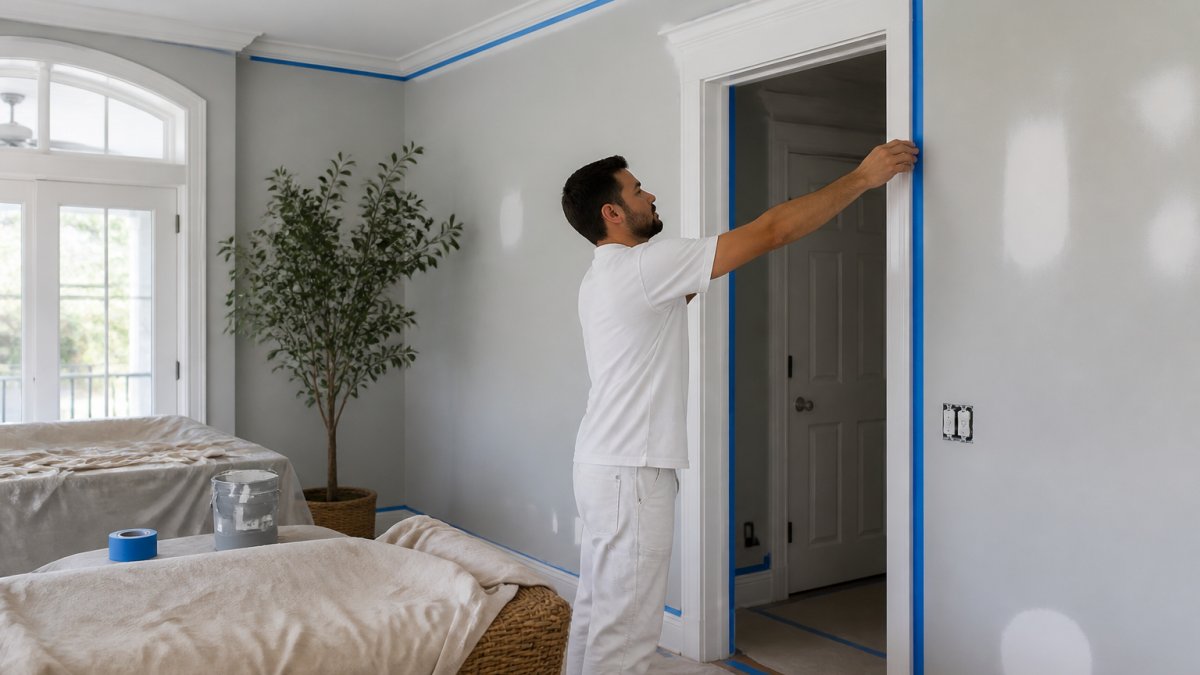
What professional painters do differently isn't a secret technique. It's discipline applied to the boring parts. Prep, protection, and patience separate a finish that lasts from one that peels within a season.
Surface Preparation: The Step DIYers Skip
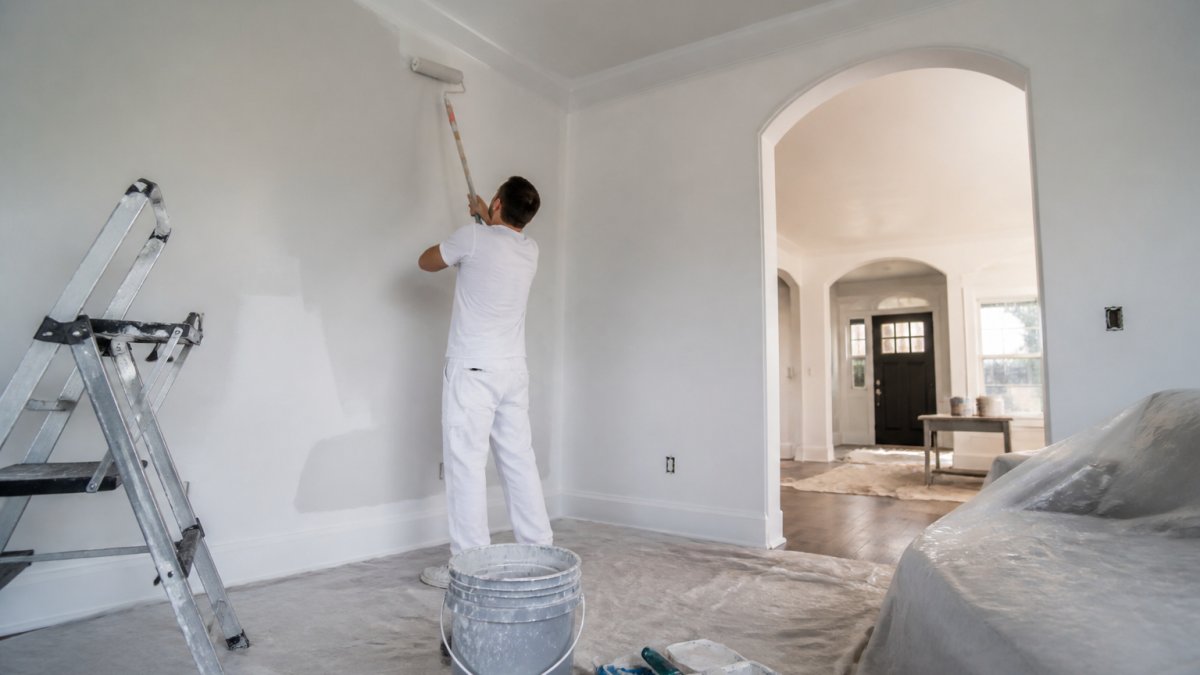
Surface preparation is the cleaning, patching, sanding, and priming done before a brush touches the wall. Skipping it is the most common reason a paint job fails early.
A professional crew fills nail holes, sands rough spots, caulks gaps, and primes bare patches. It's why a pro job costs more and why it lasts longer. Browse before and after painting photos from completed residential and commercial projects.
How Long Does It Take to Paint a Room?
A standard room typically takes a professional crew a day or less, depending on size, ceiling height, and prep needs.
Room size, ceiling height, and scope drive the estimate: walls only, or walls plus ceilings, doors, and trim.
For a homeowner, the honest math is your hourly value against the job's duration: if a room takes a pro one day and you three, you're trading your time for the savings.
How to Choose a Professional Painter
Choosing a professional painter starts with a written quote that itemizes labor, materials, and prep, not a lump sum. Ask for the scope in writing, confirm insurance, and check references from similar properties.
A few things to verify before you sign:
- Written quote with project scope: Which rooms, how many coats, what prep is included.
- Licensing and insurance: Confirm both are current.
- References from comparable properties: Coastal homes and commercial spaces face different demands than inland houses.
We're a veteran-owned company with over a decade in the trades and a deliberately limited project load, which is how we keep quality high. You can explore the full range of painting services to see whether we fit your project.
Break-Even Scenarios: When DIY Saves and When Professional Painting Pays Off
DIY saves money when the scope is small, the walls are in good shape, and your time is genuinely free. Professional painting pays off when prep is heavy, ceilings are high, or the finish must survive a demanding climate. The useful question is which costs less per year of acceptable finish.
The Assumptions Behind the Math
- DIY finish life: A careful DIY job on well-prepped walls commonly holds up for several years. A rushed job on poorly prepped walls can fail in a season or two, which is the scenario that erases the savings.
- Professional finish life: A pro job with proper prep and quality coatings is built to hold its finish longer, spreading the cost across more years.
- Repainting cost: Each repaint carries the same labor, materials, and prep as the first job, plus the disruption of emptying and covering rooms again.
These are planning assumptions, not guarantees. Climate, substrate condition, and paint quality move them in both directions.
Scenario 1: A Single Bedroom in Good Condition
The walls are sound, the ceiling is standard height, and you have a free weekend. DIY cash outlay is low, the room is small enough for a first-timer to do well, and the finish only needs to look good. This is the clearest case where DIY wins on total cost; hiring a pro here buys speed and a warranty, not a lower lifetime cost.
Scenario 2: A Whole-Home Repaint
Every room, ceilings included, trim-heavy, with furniture to move. DIY hours multiply fast, disruption stretches across weeks, and the odds of a rushed prep step rise with fatigue. A professional crew compresses the calendar, protects the space, and applies consistent prep throughout. The upfront gap is real, but the per-year cost narrows once you price your own hours and redo risk.
Scenario 3: High Ceilings, Trim, and Cabinets
Ladder work, cutting in at height, and cabinet or trim refinishing demand technique most homeowners haven't built, and mistakes here are expensive to reverse. This is where professional painting most often pays for itself, because a failed DIY attempt costs nearly as much as hiring it done correctly the first time.
Scenario 4: Older Walls That Need Repair
Patching, sanding, caulking, and priming are the invisible work that determines finish life. On walls with cracks, nail pops, or bare patches, prep is most of the job. A pro crew does it as a matter of course; a DIYer often skips it under time pressure. The break-even point shifts toward professional work as prep load rises.
How to Run Your Own Break-Even
- Estimate the years each path's finish will realistically last in your home.
- Add up the full DIY total, including your hours and a redo allowance.
- Compare it to the written professional quote, itemized by labor, materials, and prep.
- Divide each total by its expected years of finish life.
- Choose the lower per-year cost, then weigh the disruption and warranty against the difference.
Most homeowners find the answer isn't universal. It depends on the room, the prep load, and what an hour of their time is worth, the honest version of the long-term value argument, worth weighing before you commit either way.
Get a Free Estimate for Your Interior Painting Project
The clearest way to settle the worth-it question is a real number for your specific rooms. Averages only get you so far, because your walls, ceiling height, and prep needs are unique.
At Signature Coastal Coatings, we provide clear communication and transparent pricing, so you see exactly what you're paying for.
Request a free, no-obligation painting estimate and get a written quote you can compare against the cost of doing it yourself.
Frequently Asked Questions
How much do painters charge per room?
Professional interior painting typically costs $300 to $1,000 per room, with a reported standard-room average of about $624, according to a 2026 cost guide. The national average for a full interior project is around $1,200, with most homeowners paying between $605 and $2,464. Actual pricing depends on room size, ceiling height, the number of coats, and how much prep work (patching, sanding, priming) is needed. For an accurate figure, request a written quote based on your specific project scope.
Is it cheaper to paint a room yourself or hire a professional?
DIY painting is cheaper upfront because you avoid labor costs, which make up a large share of a professional quote. However, the gap narrows once you factor in paint, supplies, tools, and your time. Professional pricing typically includes materials, so the visible difference is smaller than the sticker price suggests. If your time is limited or the room needs significant prep work, the professional option often delivers better long-term value.
How long does it take to paint a room?
A single standard room usually takes a professional crew one to two days, including drying time between coats. DIYers often need two to four days because they work around jobs, dry times, and unexpected prep. Larger rooms, ceilings, and extensive patching or priming extend the timeline. Professionals also factor in furniture protection and cleanup, which adds time but protects your home. Ask your contractor for a written schedule so you can plan around the disruption.
What do professional interior painters do differently?
Professional painters follow a disciplined process: protecting furniture and floors, patching and sanding walls, priming bare or repaired areas, and applying paint with techniques that produce clean lines and even coverage. They use professional-grade equipment and often specify higher-quality paint with better durability and washability. The result is a smoother finish. Many contractors also back their workmanship with a warranty.
How do I choose a professional painter I can trust?
Verify licensing and insurance, ask for references from projects similar to yours, and request a written, itemized quote that spells out the project scope, number of coats, paint brand, and prep work included. Ask how long the job will take and what happens if the finish fails. A contractor who limits their project load and communicates clearly is usually a safer bet than the lowest bid. Get everything in writing before work begins.
The real test of whether professional interior painting is worth the cost is what happens two or three years after the last coat dries. If you want a finish that holds up and a crew that stands behind the work, get started with Signature Coastal Coatings and request your free estimate today.