 how-to
Commercial Painting Project Timeline Management: 2026 Guide
Table of Contents
- Understanding Commercial Painting Project Timeline Factors
- Realistic Commercial Painting Project Duration by Phase
- Minimizing Business Disruption During Painting
- Critical-Path Planning and Schedule Buffers
- Using Commercial Painting Project Management Software
- Choosing a Low-Activity or Closure Period for Your Project
- Frequently Asked Questions
Last Updated: October 16, 2026
Understanding Commercial Painting Project Timeline Factors
Managing a commercial painting project timeline requires more than picking a start date and hoping for the best. The reality is far more complex. Building size, site access, operational constraints, and weather all collide to create a timeline that's unique to your property.
Most business owners underestimate how many variables affect project duration. They focus on the painting itself and miss everything that happens before the brush touches the wall. That's where delays compound.
The difference between a project that finishes on schedule and one that stretches weeks longer often comes down to planning. A realistic commercial painting project timeline management approach accounts for what actually happens on site, not what should happen in theory.
How building size and scope affect duration
Larger buildings take longer. That's obvious. But the relationship isn't linear. A building twice the size doesn't take twice as long because crews can work more efficiently at scale and coordinate labor across multiple zones simultaneously.
What matters more is the scope of work. Are you painting just the exterior walls, or are you also coating the trim, doors, and metal surfaces? Interior work adds complexity because you're working around tenant operations. A 50,000-square-foot warehouse exterior might take 3-4 weeks.
Surface area drives the timeline, but so does the condition of the existing surfaces. A building with extensive repairs needed will take longer than one requiring only surface cleaning and paint application.
Site access and operational constraints
This is where most timelines fall apart. Site access determines how many crew members can work simultaneously and how long they can work each day.
If your building has limited parking, narrow access points, or shared loading areas, the crew moves slower. They spend time coordinating equipment delivery, staging materials, and managing traffic. A commercial property with good site access might support a full crew of eight to ten painters working full days.
Operational constraints are even trickier. If your building houses active businesses, the crew can't work during business hours in many areas. They're limited to evenings, early mornings, or weekends. That cuts available working hours dramatically.
Realistic Commercial Painting Project Duration by Phase
Breaking a commercial painting project into phases helps you understand where time actually goes. Most of the timeline isn't spent painting.
Pre-project planning and site assessment
Before any surface preparation begins, you need a detailed site assessment. This phase typically takes 3-5 business days.
The assessment includes evaluating existing paint condition, identifying areas needing repair, confirming color selections, and planning crew logistics. For larger buildings, the assessment might take a full week. You're documenting what needs to happen and creating a roadmap for the entire project.
This phase also includes securing necessary permits and scheduling notifications to tenants or building occupants. If your building requires city permits for exterior work, add another 1-2 weeks to the pre-project timeline. This phase is often skipped or rushed, which creates problems later when crews discover unexpected damage or surface conditions.
Surface preparation and repairs
Surface prep is the longest single phase for most commercial projects. It accounts for 30-40% of total project time.
For a typical commercial building, surface preparation takes 2-4 weeks depending on building size and existing condition. This includes:
- Pressure washing and cleaning all surfaces
- Scraping loose or peeling paint
- Filling cracks, gaps, and damaged areas
- Sanding rough spots
- Priming bare wood or metal
- Caulking joints and seams
A building in good condition with minimal repairs might complete this phase in 2 weeks. A building with extensive damage, rust, or deteriorated caulking could take 4-6 weeks. This is non-negotiable work. Skipping steps here guarantees paint failure within 2-3 years, especially in coastal environments where salt air and humidity accelerate deterioration.
Paint application and curing time
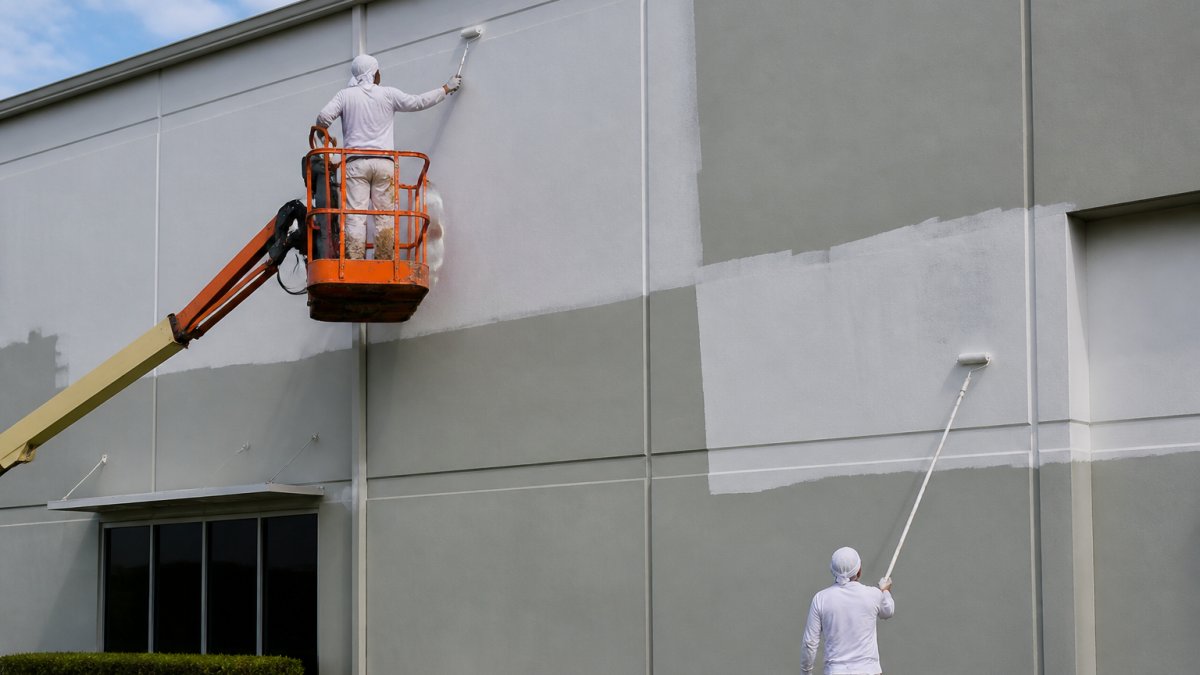
The actual painting, applying primer and topcoats, typically takes 1-3 weeks for a standard commercial building.
Application time depends on:
- Number of coats required (usually 2 coats minimum for commercial work)
- Surface area and complexity
- Crew size and productivity
- Weather conditions allowing work to proceed
Curing time is critical and often overlooked. Paint doesn't reach full cure immediately after application. Most commercial-grade coatings require 24-48 hours between coats. Some specialty coatings need 3-7 days. Full cure can take 2-4 weeks depending on the coating type, temperature, and humidity.
During curing, the painted surfaces must remain undisturbed. You can't install fixtures, move equipment, or expose the surfaces to moisture. This waiting period is built into your timeline but doesn't involve active crew work.
Final inspection and closeout
The final phase takes 2-3 business days. This includes:
- Detailed inspection of all painted surfaces
- Touch-up work on any missed spots or drips
- Cleanup and removal of protective coverings
- Final walk-through with building management
- Punch-list items and corrections
Don't underestimate this phase. A thorough inspection catches quality issues before the crew leaves. Punch-list work, fixing small imperfections, can add 1-2 days if not addressed during the project.
Minimizing Business Disruption During Painting
For commercial buildings with active tenants or operations, minimizing disruption is as important as managing the timeline. The two are connected.
Scheduling work around tenant operations
The best approach is scheduling painting during low-activity periods. If your building has predictable slow seasons, that's your window.
For retail properties, avoid peak shopping seasons. For office buildings, consider painting during summer when many employees take vacation time. For industrial facilities, schedule around production cycles when possible.
If you can't avoid peak seasons, limit work to specific zones and specific hours. Paint one floor or section while others remain fully operational. Restrict crew hours to evenings and weekends.
Communication is critical here. Tenants need advance notice, ideally 4-6 weeks, so they can plan around the work. A professional painting contractor provides detailed schedules showing which areas will be affected and when.
Occupant communication and access planning
Start communicating with building occupants at least 30 days before work begins. Provide a detailed schedule showing:
- Which areas will be painted and when
- Expected duration for each zone
- Access restrictions during work
- Parking impacts
- Noise levels and timing
- Emergency contact information for the crew
Clear communication prevents complaints and cooperation issues. Tenants who understand the timeline and plan accordingly create fewer obstacles for the crew.
Access planning is equally important. Determine:
- Where crews will stage materials and equipment
- Parking arrangements for crew vehicles
- Loading dock or entrance access
- Restroom facilities for the crew
- Waste disposal and debris removal logistics
These details seem minor but directly impact crew productivity. Poor access planning creates delays that ripple through your entire timeline.
Critical-Path Planning and Schedule Buffers
A realistic commercial painting project timeline management strategy includes buffers for the unexpected. Projects rarely proceed exactly as planned.
Weather, curing, and environmental constraints
Weather is the most common delay factor for exterior painting. Paint application requires specific conditions:
- Temperature between 50-85°F (ideally 60-75°F)
- Humidity below 85%
- No rain forecast for at least 24 hours after application
- No direct sunlight during application (causes uneven drying)
In coastal climates, humidity is a constant challenge. High humidity slows curing and can cause paint adhesion problems. Temperature swings between day and night affect drying time. A week of rain or high humidity can add 5-7 days to your timeline.
Curing time extends in cool, humid conditions. Paint that cures in 48 hours at 75°F might need 5-7 days at 55°F. This isn't just inconvenient, it affects when you can apply subsequent coats and when the building is fully operational again.
Building schedule buffers into your timeline means adding 1-2 weeks to your estimated completion date. This buffer accounts for weather delays, unexpected repairs discovered during prep, or minor crew scheduling conflicts.
Building schedule buffers into your timeline
A professional approach to commercial painting project timeline management includes contingency time.
If your estimated timeline is 8 weeks, a realistic schedule is 9-10 weeks. This accounts for:
- Weather delays (5-7 days typical)
- Unexpected repairs discovered during surface prep (3-5 days)
- Curing time extensions due to humidity or temperature (3-5 days)
- Minor crew scheduling adjustments (2-3 days)
Communicating the estimated timeline plus buffer to stakeholders sets realistic expectations. A contractor who promises 8 weeks and delivers in 9-10 weeks appears to have missed the deadline. A contractor who estimates 10 weeks and delivers in 9 weeks appears efficient.
Using Commercial Painting Project Management Software
Managing a complex project with multiple phases, crew coordination, and stakeholder communication is easier with the right tools.
Schedule tracking and progress reporting
Project management software allows you to:
- Create detailed timelines with dependencies between phases
- Track actual progress against planned schedules
- Identify delays early and adjust the timeline
- Generate progress reports for stakeholders
- Manage crew assignments and labor allocation
- Document completion of each phase with photos
Many contractors use basic tools like spreadsheets or calendars. Professional-grade project management software provides visibility that prevents surprises. You see delays coming and can adjust crew size or work hours to recover time.
Progress reporting keeps everyone informed. Weekly updates showing what was completed, what's planned for next week, and any issues builds confidence that the project is on track.
Managing change orders and scope changes
Scope changes are inevitable on commercial projects. Tenants request additional areas be painted. Surface prep reveals damage requiring extra repairs. Weather or curing time extends timelines.
A formal change order process protects both the contractor and the building owner. When scope changes, the timeline and budget shift accordingly. Documenting these changes prevents disputes and keeps the project moving forward transparently.
Software-based change tracking creates a clear record of what was original scope and what was added. This is especially important for commercial buildings where multiple stakeholders need to understand cost and schedule impacts.
Choosing a Low-Activity or Closure Period for Your Project
Strategic timing can cut your timeline by 20-30% and minimize disruption dramatically.
Identify your building's natural low-activity periods. For retail, that's typically January or late August through early September. For office buildings, summer months often see reduced occupancy.
Scheduling your commercial painting project during these periods allows:
- Full crew deployment without access restrictions
- Extended working hours (full 40-hour weeks instead of evenings/weekends)
- Faster curing due to better weather conditions
- Fewer occupant conflicts and complaints
- Faster completion and return to normal operations
A project that would take 10 weeks with occupancy restrictions might take 6-7 weeks during a closure period.
Planning 6-12 months ahead gives you time to schedule during optimal windows. Last-minute painting projects force you to work around existing operations, which always extends timelines and increases costs.
Managing a commercial painting project timeline requires understanding all the variables at play.
The difference between a project that finishes on schedule and one that drags on comes down to planning. If you're planning a commercial painting project, request a free estimate that includes a detailed timeline showing each phase and realistic completion date.
Frequently Asked Questions
How long does a typical commercial painting project take?
Commercial painting project duration depends on building size, scope, and surface condition. Small commercial jobs may take 2-4 weeks; medium projects 4-8 weeks; large-scale work 8-16 weeks or longer. Coastal properties requiring specialized preparation for salt air and humidity often need additional time for surface repairs and primer application. Your contractor should provide a phase-by-phase timeline during the planning stage.
What factors cause delays in commercial painting projects?
Common delays include weather conditions (humidity, temperature extremes, rain), surface preparation taking longer than estimated, unforeseen structural repairs, curing time between coats, crew scheduling conflicts, and scope changes. Coastal environments add complexity: salt-air damage often requires more extensive prep work. Building in schedule buffers of 10-15% helps absorb these delays without derailing your entire project.
How can I minimize business disruption during a commercial painting project?
Schedule painting during low-activity periods or planned closures when possible. Coordinate with tenants in advance to establish work hours that avoid peak operations. Use phased approaches that allow partial building access. Establish clear communication protocols and update occupants on progress weekly. Professional project management software tracks milestones and helps you stay on schedule, reducing overall disruption length.
What's the difference between residential and commercial painting timelines?
Commercial projects involve larger square footage, stricter scheduling requirements around business operations, more complex surface preparation, and higher quality standards. Residential timelines focus on minimizing homeowner inconvenience; commercial timelines must protect tenant productivity and revenue. Commercial work also requires coordination with multiple stakeholders and often involves weather-resistant or specialty coatings that add curing time.