 how-to
Paint Commercial Buildings Without Disruption
Table of Contents
- Assess Your Building and Plan Around Operations
- Create a Phased Painting Schedule for Businesses
- Schedule Work During Off-Hours and Low-Traffic Periods
- Communicate with Tenants, Employees, and Contractors
- Manage Work Zones and Control Workplace Impacts
- Commercial Painting Safety Standards and OSHA Compliance
- Monitor Progress and Adjust for Unexpected Delays
- Frequently Asked Questions
Last Updated: October 11, 2026
Assess Your Building and Plan Around Operations
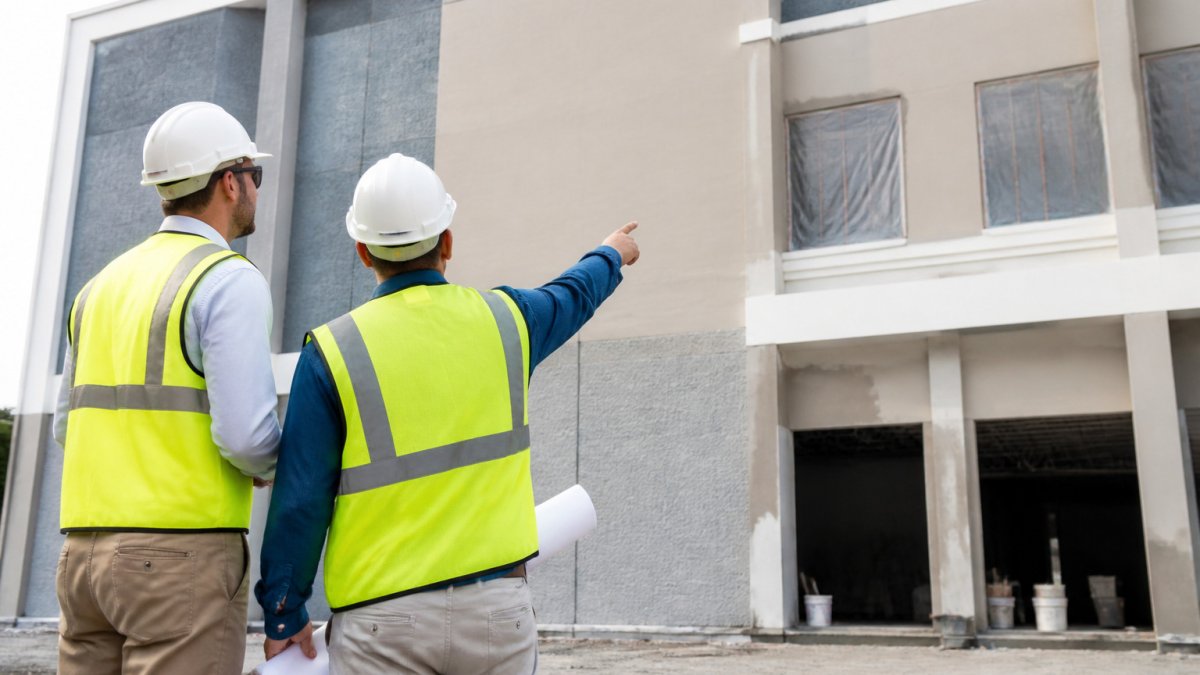
Walk through your commercial space and inspect walls, ceilings, trim, cracks, peeling paint, water damage, and areas needing repair to understand the scope of commercial painting disruption. This assessment determines project duration and required prep work.
Meet with tenants, employees, and property managers to understand their schedules, peak hours, and critical operations. Retail, office, and medical facilities each require different scheduling approaches.
Document everything with photos and notes on occupied versus empty rooms. Create a detailed building assessment that becomes the foundation for your painting commercial buildings without business disruption strategy, preventing surprises and setting clear contractor expectations.
Create a Phased Painting Schedule for Businesses
Divide your commercial building into zones and paint them one phase at a time, keeping most space operational while work happens in contained areas.
Map out zones in priority order: back hallways and storage rooms first, then client-facing spaces. Paint one floor at a time rather than jumping between levels.
Add 20% buffer time to your estimate for weather delays, hidden repairs, and scheduling conflicts. Communicate this realistic timeline to everyone involved.
Ensure clear handoffs between phases so the next zone starts immediately when one finishes, preventing incomplete appearance and maintaining momentum.
Schedule Work During Off-Hours and Low-Traffic Periods
Off-hours painting eliminates disruption, but success requires mapping your work plan to your building's specific operating calendar rather than generic timing.
Build a day-by-day occupied-building project sequence. Start by documenting your tenants' or employees' exact hours. If your office opens at 8 a.m. and closes at 6 p.m., your painting window is 6 p.m. to 8 a.m., a 14-hour window. If you have a retail tenant open until 9 p.m., that window shrinks to 9 p.m. to 8 a.m. the next day. Map this constraint against your total project scope.
For a typical 2,000-square-foot office space requiring surface prep, primer, and two finish coats, a professional crew can complete one zone (roughly 400-500 square feet) in 8-10 hours of focused work. This means:
- Monday-Friday evenings (6 p.m.-10 p.m.): Prep and primer on Zone 1 (4 hours)
- Saturday morning (8 a.m.-4 p.m.): First coat on Zone 1 (6 hours)
- Saturday evening-Sunday morning: Second coat on Zone 1 (6 hours)
- Monday-Friday evenings (Week 2): Prep and primer on Zone 2 (4 hours)
- Repeat cycle for remaining zones
This phased sequence keeps occupied areas accessible during business hours while maintaining momentum. Each zone is fully completed before the crew moves to the next, preventing the "half-painted building" appearance that disrupts tenant confidence.
Identify low-traffic windows within business hours for prep work. Surface cleaning, minor repairs, and taping can happen during slower periods (typically 2 p.m.-4 p.m. and Tuesdays-Thursdays). This compresses off-hours workload and reduces crew fatigue.
Account for weather and material delays in your sequence. Paint application requires temperatures between 50°F and 85°F and humidity below 85%. Build a 2-3 day buffer into each phase and have indoor prep work (drywall patching, caulking, sanding) ready as contingency when weather prevents coating application.
Communicate the specific schedule to all stakeholders. Vague timelines like "evenings and weekends" create anxiety. Instead, send tenants and employees a detailed calendar:
"Painting Schedule - Building A
Week 1: East hallway and restrooms (off-hours only)
- Monday-Friday: 6 p.m.-10 p.m.
- Saturday: 8 a.m.-4 p.m.
- Sunday: 8 a.m.-2 p.m.
Week 2: Administrative offices (off-hours only)
- Monday-Friday: 6 p.m.-10 p.m.
- Saturday: 8 a.m.-4 p.m.
Week 3: Lobby and client-facing areas (off-hours only)
- Monday-Friday: 6 p.m.-10 p.m.
- Saturday: 8 a.m.-4 p.m.
- Sunday: 8 a.m.-2 p.m.
Final inspection: Monday, [date], 9 a.m.-12 p.m."
This specificity sets expectations and demonstrates professional planning.
Track adherence to the schedule as a disruption metric. Measure success by schedule variance, how many times work ran past agreed end times or spilled into business hours. Use this data to refine future projects and hold contractors accountable.
Communicate with Tenants, Employees, and Contractors
Clear communication prevents panic and builds trust. Start conversations weeks before work begins, not days before.
Send written notices to all tenants and employees with project timeline, affected areas, phase expectations, and contact information. Be specific with dates, times, and access limitations.
Hold a pre-project meeting with contractors, property managers, and key tenants to review schedule, safety protocols, and contingency plans. Assign one main contact for all project updates.
Send weekly updates reporting progress and confirming upcoming phases. Notify everyone immediately of any delays with revised timelines.
Manage Work Zones and Control Workplace Impacts
Controlling air quality, odors, and dust requires specific product and ventilation strategies tailored to occupied buildings.
Select low-VOC and zero-VOC coatings for occupied-building work. Volatile organic compounds (VOCs) are chemicals that evaporate from paint and primers, creating odors and indoor air quality problems. Standard interior latex paints typically contain 5-50 grams per liter (g/L) of VOCs.
Common low-VOC and zero-VOC options include:
- Zero-VOC latex paints (0-5 g/L): Brands meeting Green Seal GS-11 or similar standards emit minimal fumes. These cost 10-20% more than standard paints but eliminate odor complaints in occupied spaces.
- Low-VOC primers (under 100 g/L): Essential for blocking stains and sealing repairs without overwhelming adjacent tenants. Standard primers often exceed 200 g/L and create strong odors that penetrate walls.
- Water-based polyurethane topcoats (under 100 g/L): Provide durability comparable to solvent-based coatings without the harsh fumes.
Verify VOC content on the product's Safety Data Sheet (SDS) before purchasing. Contractors sometimes default to cheaper, higher-VOC products to reduce costs. Specify low-VOC requirements in your contract and confirm delivery before work begins.
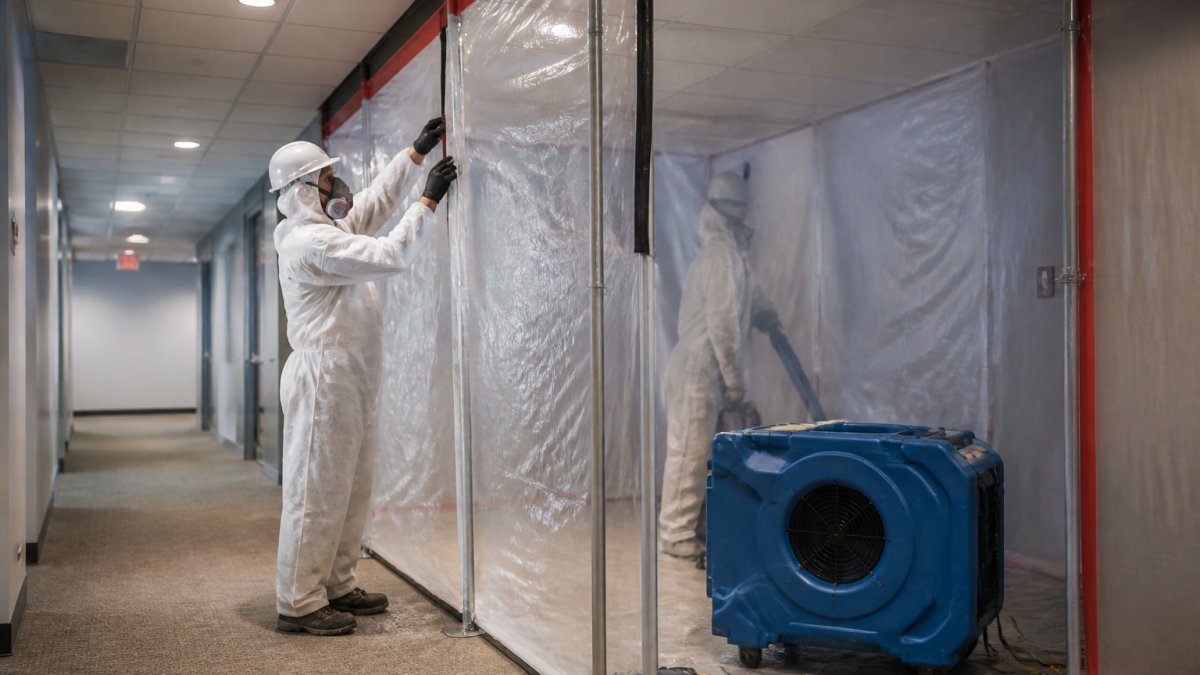
Manage dust with wet methods and HEPA filtration. Wet-wipe all surfaces before painting using damp cloths or HEPA-filter vacuums. Connect all prep work tools to HEPA-filter vacuums (standard shop vacuums recirculate fine particles). Wet-wipe work areas daily at shift end to capture settled dust.
Control odors through ventilation timing and product choice. Paint during off-hours (odors strongest during application and first 4-6 hours of drying). Run ventilation systems for 24 hours after final coat. Open windows in adjacent spaces when weather permits (50°F-85°F, low humidity).
Manage noise and equipment disruption with scheduling and communication. Schedule loud prep work (sanding, scraping) mid-afternoon or early evening. Use quieter equipment when possible (orbital sanders over belt sanders, electric over pneumatic). Provide 48-hour notice before loud tasks.
Establish clear work-zone boundaries and traffic management. Physical barriers prevent accidents and contain impacts:
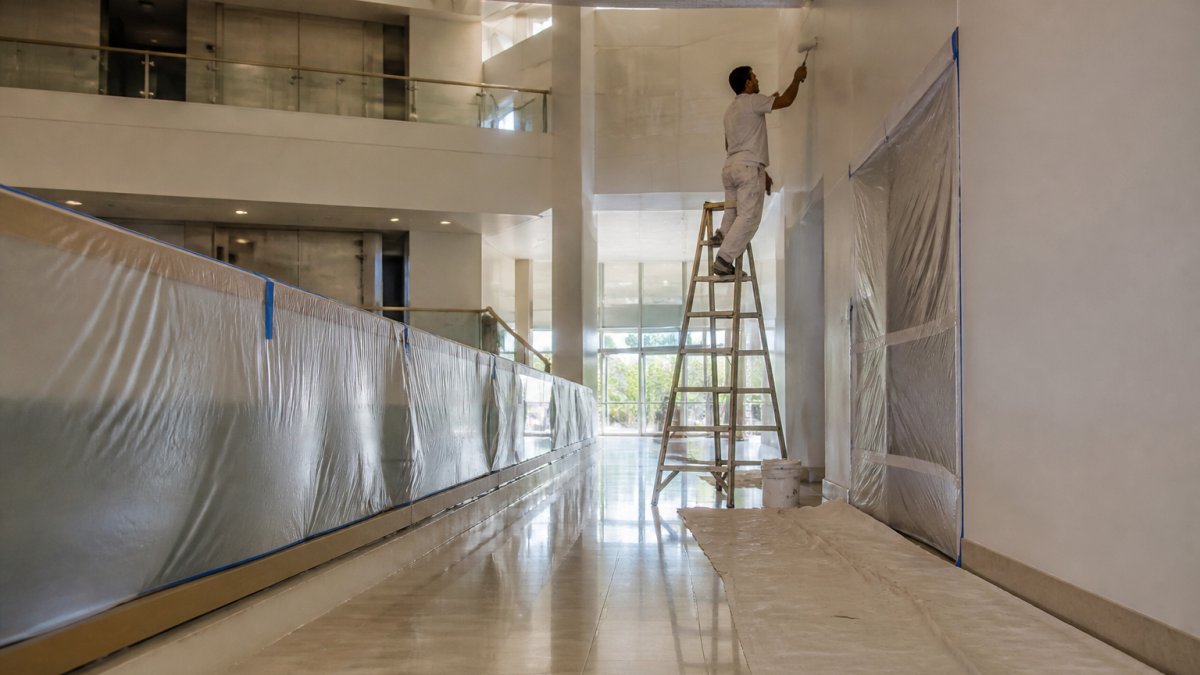
- Use temporary walls or plastic barriers: Isolate work zones completely. This prevents accidental contact with wet paint, reduces dust migration, and clearly signals that the area is off-limits.
- Mark hazards prominently: Place "Wet Paint," "No Entry," and "Caution" signs at all work-zone entrances. Use high-visibility tape on barriers and equipment.
- Maintain clear pathways: If a hallway is partially painted, ensure the unpainted side remains fully accessible. Never force tenants or customers to navigate around work zones.
- Protect fixtures and equipment: Cover light switches, outlet covers, door handles, and other frequently touched surfaces with plastic or tape. This prevents paint transfer to hands and clothing.
Commercial Painting Safety Standards and OSHA Compliance
Safety protects your crew and your building occupants. Follow OSHA standards for fall protection, respiratory safety, chemical handling, and equipment operation. Your contractors should carry current certifications and insurance.
Require all workers to wear appropriate personal protective equipment. Hard hats, safety glasses, gloves, and respirators prevent injuries and health risks. In occupied buildings, respiratory protection is essential because you're working near people who could be affected by fumes.
Establish clear safety protocols before work begins. Mark hazards. Secure ladders and scaffolding properly. Keep electrical cords away from water and paint. Store chemicals safely away from occupied areas. Train all crew members on emergency procedures.
Document safety inspections and incidents. If an accident occurs, you have records showing you took proper precautions. This protects your business legally and demonstrates your commitment to protecting people in the building.
We prioritize safety on every commercial painting project. Our crew follows OSHA standards strictly, maintains current certifications, and uses only approved equipment and materials. We understand that safety in an occupied building requires extra vigilance and professional discipline.
Monitor Progress and Adjust for Unexpected Delays
Check on the project daily. Walk through work areas. Review the schedule against actual progress. If the crew is ahead of schedule, you might accelerate the next phase. If delays occur, adjust the timeline immediately.
Weather delays happen frequently and can intensify commercial painting disruption when proper contingency plans aren't in place. Rain, extreme heat, or humidity can prevent paint application. Build weather contingencies into your schedule. Have indoor prep work ready when outdoor work isn't possible.
Hidden damage discovered during prep work extends timelines. Rotted wood, structural damage, or asbestos require professional remediation before painting proceeds. Budget time and money for these surprises. They're common in older commercial buildings.
Communicate adjustments immediately to affected tenants. If a phase finishes early, let people know the next phase starts sooner. If delays push timelines back, explain why and provide a revised schedule. Transparency prevents frustration and maintains cooperation.
Track costs against your budget. Delays, material price increases, and unexpected repairs can blow budgets quickly. Monitor spending daily. Alert stakeholders to cost overruns before they become major problems.
Painting a commercial building without disrupting operations requires careful planning, clear communication, and disciplined execution. We bring over a decade of experience managing complex commercial projects in occupied buildings. Our team understands that your business doesn't pause for painting, and neither do we. Get a free estimate and discover how we minimize disruption while delivering professional-grade results that last.
| Phase | Duration | Best For | Key Actions |
|---|---|---|---|
| Building Assessment | 1-2 days | All projects | Inspect surfaces, document damage, identify repairs |
| Phase 1 Prep | 3-5 days | Back areas | Surface cleaning, repairs, primer application |
| Phase 2 Painting | 5-7 days | Secondary spaces | Paint application, second coat, touch-ups |
| Phase 3 Finishing | 3-5 days | Client-facing areas | Final coats, detail work, cleanup |
| Final Inspection | 1 day | Quality assurance | Verify coverage, address defects, final walkthrough |
Frequently Asked Questions
What's the best way to schedule commercial painting without shutting down business operations?
Phased scheduling is the most effective approach. Divide the project into zones and paint one area at a time, keeping the rest operational. Schedule work during off-hours, early mornings, or weekends when foot traffic is lowest. Communicate timelines clearly to tenants and employees at least two weeks in advance. This strategy maintains business continuity while ensuring professional paint application and proper surface preparation without rushing.
What are the benefits of off-hours commercial painting?
Off-hours work eliminates interruptions to daily operations, reduces safety risks from active business traffic, and allows crews to work efficiently without coordinating around occupants. Employees and customers experience zero disruption to their routines. Painters can focus on quality surface preparation and paint application without time pressure. Early morning or evening shifts also reduce heat exposure, improving coating cure time in Florida's climate.
What commercial painting safety standards does OSHA require?
OSHA mandates fall protection for work above 6 feet, proper scaffolding setup, hazard communication for paint chemicals, respiratory protection when spraying, and confined space protocols. Painters must wear hard hats, eye protection, and appropriate PPE based on the task. Occupied buildings require additional controls: containment systems to prevent paint drift, ventilation to manage fumes, and barriers to keep occupants away from work zones. Licensed contractors stay current on these standards.
How can I communicate the painting schedule to tenants and employees?
Provide written notice at least two weeks before work begins, detailing affected areas, work hours, expected duration, and access restrictions. Use email, bulletin boards, and direct conversations with key stakeholders. Designate a single point of contact for questions or concerns. Send weekly updates if the project spans multiple phases. For multi-tenant buildings, coordinate through the property manager to ensure consistent messaging and minimize confusion about which areas are affected.